2017-11-23
This Just In From Seattle Music History!!!
Top Stories
Chris Cornell’s Daughters Jam Session With A Rock Legend’s Widow Will Melt Your Heart
By Brett Buchanan - Nov 23, 2017 0
A beautiful photo was recently shared of Chris Cornell’s daughters Lily and Toni jamming together, with Toni playing guitar and Lily singing. Johnny Ramone’s widow Linda is seen watching.


2017-11-03
Jimi Hendrix, in his own words: 'I dig Strauss and Wagner – those cats are good' | Music | The Guardian 2013
This Just In From Seattle Music History!!!
When I was 17 I formed this group with some other guys, but they drowned me out. I didn't know why at first, but after about three months I realised I'd have to get an electric guitar. My first was a Danelectro, which my dad bought for me. Must have busted him for a long time. But I had to show him I could play first. In those days I just liked rock'n'roll, I guess. We used to play stuff by people like the Coasters. Anyway, you all had to do the same things before you could join a band. You even had to do the same steps. I started looking around for places to play. I remember my first gig was at an armoury, a National Guard place, and we earned 35 cents apiece and three hamburgers. It was so hard for me at first. I knew about three songs, and when it was time for us to play onstage I was all shaky, so I had to play behind the curtains. I just couldn't get up in front. And then you get so very discouraged. You hear different bands playing around you, and the guitar player always seems like he's so much better than you are. Most people give up at this point, but it's best not to. Just keep on, just keep on. Sometimes you are going to be so frustrated you'll hate the guitar, but all of this is just a part of learning. If you stick with it you're going to be rewarded. If you're very stubborn you can make it.
23 September 1966. That's when I came to England. They kept me waiting at the airport for three or four hours because I didn't have a work permit. At one point there was talk of sending me back to New York until it was all sorted out. They carried on like I was going to make all the money in England and take it back to the States!I moved into a flat with Chas Chandler. It used to belong to Ringo [Starr]. In fact, they only took the drums away the other day. There's stereo all over the place and a very kinky bathroom with lots of mirrors. Immediately complaints started to pour in. We used to get complaints about loud, late parties when we were out of town! We'd come back next morning and hear all the complaints. Chas got real mad about it, but I didn't let it bug me.
The first time I played guitar in England I sat in with Cream. I like the way Eric Clapton plays. His solos sound just like Albert King. Eric is just too much. And Ginger Baker, he's like an octopus, man. He's a real natural drummer.
I couldn't work too much because I didn't have a permit. If I was going to stay in England I had to get enough jobs to have a long permit. So what we had to do was line up a lot of gigs. Chas knows lots of telephone numbers. He helped me find my bassist and drummer and form the Jimi Hendrix Experience. It was very hard to find the right sidemen, people who were feeling the same as me.
18 June 1967. Monterey, California. Paul McCartney was the big bad Beatle, the beautiful cat who got us the gig at the Monterey Pop Festival. That was our start in America. Everything was perfect. I said: "Wow! Everything's together! What am I gonna do?"
In other words, I was scared at that, almost. I was scared to go up there and play in front of all those people. You really want to turn those people on. It's just like a feeling of really deep concern. You get very intense. That's the way I look at it. That's natural for me. Once you hit the first note, or once the first thing goes down, then it's all right. Let's get to those people's butts!
Jimi Hendrix, looking serious, leaning against railings at Montagu Place, London
Jimi Hendrix: 'We made it, man, because we did our own thing. We had our beautiful rock-blues-country-funky-freaky sound, and it was really turning people on. I felt like we were turning the whole world on to this new thing'. Photographed in London, in 1967. Photograph: David Magnus/Rex
Music makes me high onstage, and that's the truth. It's almost like being addicted to music. You see, onstage I forget everything, even the pain. Look at my thumb – how ugly it's become. While I'm playing I don't think about it. I just lay out there and jam. You get into such a pitch sometimes that you go up into another thing. You don't forget about the audience, but you forget about all the paranoia, that thing where you're saying: "Oh gosh, I'm onstage – what am I going to do now?" Then you go into this other thing, and it turns out to be almost like a play in certain ways. I have to hold myself back sometimes because I get so excited – no, not excited, involved.
When I was in Britain I used to think about America every day. I'm American. I wanted people here to see me. I also wanted to see whether we could make it back here. And we made it, man, because we did our own thing, and it really was our own thing and nobody else's. We had our beautiful rock-blues-country-funky-freaky sound, and it was really turning people on. I felt like we were turning the whole world on to this new thing, the best, most lovely new thing. So I decided to destroy my guitar at the end of the song as a sacrifice. You sacrifice things you love. I love my guitar.
Race isn't a problem in my world. I don't look at things in terms of races. I look at things in terms of people. I'm not thinking about black people or white people. I'm thinking about the obsolete and the new. There's no colour part now, no black and white. The frustrations and riots going on today are all about more personal things. Everybody has wars within themselves, so they form different things, and it comes out as a war against other people. They get justified as they justify others in their attempts to get personal freedom. That's all it is.
It isn't that I'm not relating to the Black Panthers. I naturally feel a part of what they're doing, in certain respects. Somebody has to make a move, and we're the ones hurting most as far as peace of mind and living are concerned. But I'm not for the aggression or violence or whatever you want to call it. I'm not for guerrilla warfare. Not frustrated things like throwing little cocktail bottles here and there or breaking up a store window. That's nothing. Especially in your own neighbourhood. Jimi Hendrix - "Hear My Train A Comin'" on MUZU.TV.
I don't feel hate for anybody, because that's nothing but taking two steps back. You have to relax and wait to go by the psychological feeling. Other people have no legs or no eyesight or have fought in wars. You should feel sorry for them and think what part of their personality they have lost. It's good when you start adding up universal thoughts. It's good for that second. If you start thinking negative it switches to bitterness, aggression, hatred. All those are things that we have to wipe away from the face of the earth before we can live in harmony. And the other people have to realise this, too, or else they're going to be fighting for the rest of their lives.
Advertisement
I hope at least to give the ones struggling courage through my songs. I experience different things, go through the hang-ups myself, and what I find out I try to pass on to other people through music. There's this song I'm writing now that's dedicated to the Black Panthers, not pertaining to race, but to the symbolism of what's happening today. They should only be a symbol to the establishment's eyes. It should only be a legendary thing.
My initial success was a step in the right direction, but it was only a step. Now I plan to get into many other things. I'd like to take a six-month break and go to a school of music. I want to learn to read music, be a model student and study and think. I'm tired of trying to write stuff down and finding I can't. I want a big band. I don't mean three harps and 14 violins – I mean a big band full of competent musicians that I can conduct and write for.
I want to be part of a big new musical expansion. That's why I have to find a new outlet for my music. We are going to stand still for a while and gather everything we've learned musically in the last 30 years, and we are going to blend all the ideas that worked into a new form of classical music. It's going to be something that will open up a new sense in people's minds.
I dig Strauss and Wagner, those cats are good, and I think they are going to form the background of my music. Floating in the sky above it will be the blues – I've still got plenty of blues – and then there will be western sky music and sweet opium music (you'll have to bring your own opium!), and these will be mixed together to form one. And with this music we will paint pictures of earth and space, so that the listener can be taken somewhere. You have to give people something to dream on.
Advertisement
The moment I feel that I don't have anything more to give musically, that's when I won't be found on this planet, unless I have a wife and children, because if I don't have anything to communicate through my music, then there is nothing for me to live for. I'm not sure I will live to be 28 years old, but then again, so many beautiful things have happened to me in the last three years. The world owes me nothing.
When people fear death, it's a complete case of insecurity. Your body is only a physical vehicle to carry you from one place to another without getting into a lot of trouble. So you have this body tossed upon you that you have to carry around and cherish and protect and so forth, but even that body exhausts itself. The idea is to get your own self together, see if you can get ready for the next world, because there is one. Hope you can dig it.
People still mourn when people die. That's self-sympathy. All human beings are selfish to a certain extent, and that's why people get so sad when someone dies. They haven't finished using him. The person who is dead ain't crying. Sadness is for when a baby is born into this heavy world.
I tell you, when I die I'm going to have a jam session. I want people to go wild and freak out. And knowing me, I'll probably get busted at my own funeral. The music will be played loud and it will be our music. I won't have any Beatles songs, but I'll have a few of Eddie Cochran's things and a whole lot of blues. Roland Kirk will be there, and I'll try and get Miles Davis along if he feels like making it. For that it's almost worth dying. Just for the funeral. It's funny the way people love the dead. You have to die before they think you are worth anything. Once you are dead, you are made for life. When I die, just keep on playing the records.
This is an edited excerpt from Starting at Zero: His Own Story (Bloomsbury, £12.99). To order a copy for £14.99, with free UK p&p, go to theguardian.com/bookshop or call 0330 333 6846
The Levee Walkers, a supergroup with members of Pearl Jam, Guns N' Roses and Screaming Trees, premiere poignant new song "All Things Fade Away." By Ryan Reed
This Just In From Seattle Music History!!!
The Levee Walkers, a supergroup with members of Pearl Jam, Guns N' Roses and Screaming Trees, premiere poignant new song "All Things Fade Away."
By Ryan Reed
20 hours ago
The Levee Walkers are a Seattle-based supergroup featuring Pearl Jam guitarist Mike McCready, Guns N' Roses bassist Duff McKagan and drummer Barrett Martin of Screaming Trees and many other projects. The band recruited local singer-songwriter Ayron Jones to front their poignant new single "All Things Fade Away," premiering here.
Jones reflects on death and childhood memories throughout the cathartic track. "Remember the time we took a walk downtown/And you held my hand in the pouring rain?" he croons over a sparse, buzzing guitar riff. "I was three years old, and you were 22/But even then I knew your life would end this way."
RELATED
Pearl Jam, GN'R Members Unite for Raucous Stooges Covers Gig
Martin, who produced Jones' recently issued LP, Audio Paint Job, initiated the collaboration after introducing the singer to his bandmates. Jones wrote lyrics to the Levee Walkers' music, and McKagan was so impressed with the frontman that he invited him to open Guns N' Roses' September show in Washington.
"Ayron is such a special and badass new Seattle artist," McKagan told Rolling Stone. "I went to a show of his last year in Seattle, and it was one of those that just simply made me realize how glad I am that I chose music as a path. Mike and Barrett are, of course, the best at what they do as well. I'm a proud Walker of Levees!"
"The three of us [conceived the Levee Walkers] to make music with guest vocalists," McCready added, describing the project. "It's been a cool, enlightening experience for me as Duff and Barrett push me to be a better musician. We've been lucky enough to have Jaz Coleman from Killing Joke and Latin artist Raquel Sophia sing with us. Our latest great singer and guitar player is Ayron Jones from Seattle. Ayron is a super-talented singer-songwriter who has added a new fuel to the fire of Levee Walkers songs. He is also a smokin' guitar player that needs to be heard."
"All Things Fade Away," backed with another new song "Madness," is the band's third single, following a pair of 2016 releases featuring Coleman and Sophia. Martin produced the latest release, with Seattle icon Jack Endino mixing. The two new tracks will be available for purchase Friday, both digitally and on a seven-inch.
More News
Pearl Jam Capture Wrigley Field Shows in 'Let's Play Two' Concert Film
Flashback: Pearl Jam Finally Relents, Plays 'Bugs' Live in 2009
Pearl Jam's Mike McCready: Dave Abbruzzese 'Should've Been in Rock Hall'
All Stories
Around the Web
The Real Reason We Don't Hear From Bam Margera Anymorelooper.com
One-Hit Wonders You Had No Idea Are Deadnickiswift.com
Stars You May Not Know Passed Awaygrunge.com
Powered by ZergNet
Don’t Miss a Story
Sign up for our newsletter to receive breaking news directly in your inbox.
Enter your email address
Sign Up
How we use your email address
Around the Web
Horror Movie Scenes That Tooks Things Way Too Farlooper.com
Whatever Happened to The Man With the Golden Voice?nickiswift.com
Grown-Up Child Stars Who Need to Give Upnickiswift.com
Sketchy Things Everyone Ignores About Kaley Cuoconickiswift.com
The Meanest Celebrities You Never Want to Meet in Real Lifenickiswift.com
The Biggest Jerks in Musicnickiswift.com
Powered by ZergNet
Trending
Corey Feldman Names His Alleged Pedophile...
Corey Feldman Names His Alleged Pedophile Abuser on Dr. Oz Show
9.4
Guns N' Roses, Pearl Jam Supergroup: Hear...
Guns N' Roses, Pearl Jam Supergroup the Levee Walkers: Hear Cathartic New Song
9.2
'Destiny 2': Where's Xur and What's He...
'Destiny 2': Where's Xur and What's He Selling (November 3rd)?
8.2
Art Garfunkel on His Unusual New Book, the...
Art Garfunkel on His Unusual New Book, the End of Simon and Garfunkel
7.5
Hear Taylor Swift's New Song 'Call It What...
Hear Taylor Swift's New Song 'Call It What You Want'
7.1
© Rolling Stone 2017
Digital Edition
Subscribe
Give a Gift
Coverwall
Contact
Privacy Policy
Your Privacy Rights
Your Ad Choices
Terms of Use
Customer Service
Advertise
Sitemap
gumgum-verify
2017-09-10
Indian music gets a world-class museum, with IME Bengaluru set to open by end of 2017
This Just In From Seattle Music History!!! IME Bengaluru set to open by end of 2017
LivingNeha KirpalSep, 10 2017 12:14:45 IST
 Imagine a repository of everything about Indian music under a single roof. For music lovers, this may no longer be a mere dream, as the country’s first-of-its kind music museum is slated to open in Bengaluru by the end of 2017. An initiative of the Indian Music Trust and supported by the Brigade Group, the Centre for Indian Music Experience (IME) has been modelled on the lines of Seattle’s Experience Music Project, which was founded by Microsoft’s Paul Allen.
Dr Suma Sudhindra, director — Outreach, told Firstpost about the project, “The IME is going to be a landmark centre which will change the way Indians look at museums.” Built on a plot of about one hectare in south Bengaluru’s Brigade Millennium Enclave, its state-of-the-art four-storey building consists of eight thematic galleries showcasing various facets of Indian music, an instruments' gallery with 250 musical instruments, and several computer-based interactive installations that allow visitors to experience the process of music-making.
With interactive multimedia galleries, performance venues and learning spaces, the centre will be dedicated to exploring India’s cultural nuances through its music — everything from classical to folk, regional and Bollywood. Project director Manasi Prasad told Firstpost, "Visitors can look forward to hours and days of discovering different genres of music, understanding the stories behind the songs, and making music themselves.”
The proposed IME building
The proposed IME building
Gallagher and Associates, which helped create the Grammy Museum in Los Angeles, has been roped in for the project. And undoubtedly, its facilities are comparable to any world-class institute. In July, the IME’s Sound Garden opened for visitors. Here, visitors can undertake a guided tour that takes one on a journey through sound, vibration, frequencies and resonances through musical sculptures such as xylophone tables, metallophones, plate gongs, tubular bells, wind chimes, humming stones and reeds. Speaking about the response that the garden has received so far, Dr Sudhindra said, “I am sure that the IME will play a huge role in making music accessible to the common man. Additionally, it will also be the destination point for all music connoisseurs, researchers and music students.”
The Hall of Fame features 100 legends from all genres, including Hariprasad Chaurasia, Zakir Hussain and Asha Bhosle. The top floor even has a sound lab, where children can jam or perform using computer-aided interactive and touch screens. There are also photo ops where visitors can pose with a brass band, record a track in a mini studio with mixing consoles and email it to themselves, or create a cover design for a CD. Further, there are several audio/visual kiosks and iPads for people to listen to different forms of music.
Various artists, bands and private collectors pitched in to set up the rare museum contributing their collections of unreleased music, high-resolution videos and footage. Further, government institutions such as the All India Radio and the Centre for Cultural Resources and Training, have also shared content.
Outdoor music installations at the IME, Bengaluru
Outdoor music installations at the IME, Bengaluru
DCI_6009DCI_6034
In addition, the IME’s Learning Centre, which started two years ago, already works towards delivering curriculum-based music education in the form of lessons, seminars, workshops and music appreciation courses. “We will be developing an active calendar of performances, workshops and seminars at the centre to make it a musical hub of the city,” added Prasad.
Museums across the world are moving to an experiential model where they serve not just as archives but also institutions that tell stories, ask questions and interpret artefacts for their audiences. The team behind the project did extensive research before starting, surveying about 10 similar museums in the US for factors like display, lighting, maintenance, storage, server rooms and archives. They now hope that the Centre becomes not just a cultural landmark that documents the history and diversity of Indian music, but also an active participant in supporting and shaping its future. "We are already being approached by museums and arts centres from across the world to send our travelling exhibitions on Indian music, and to host their exhibitions here,” said Prasad.
Needless to say, the target segment is youngsters, as the unique museum hopes to educate people about India's rich musical diversity and inspire creativity through music. “School children are one of our primary target audiences, so we want to create a whole generation of musically aware and engaged youngsters,” adds Prasad. All in all, an educative and cultural journey through India’s rich heritage, the Indian Music Experience promises to rediscover the rich legacy of Indian music through a personal and transformational experience.
At Indian Music Experience Trust, Opposite Woodrose Club, Brigade Millennium, JP Nagar 7th Phase, Bengaluru 560078
Published Date: Sep 10, 2017 12:14 pm | Updated Date: Sep 10, 2017 12:14 pm
Tags :#Artsandculture#Bengaluru music museum#Centre for indian music experience#Centre for indian music experience bengaluru#Fweekend#Ime#Ime museum#Ime museum bangalore#Indian music museum#Music
Imagine a repository of everything about Indian music under a single roof. For music lovers, this may no longer be a mere dream, as the country’s first-of-its kind music museum is slated to open in Bengaluru by the end of 2017. An initiative of the Indian Music Trust and supported by the Brigade Group, the Centre for Indian Music Experience (IME) has been modelled on the lines of Seattle’s Experience Music Project, which was founded by Microsoft’s Paul Allen.
Dr Suma Sudhindra, director — Outreach, told Firstpost about the project, “The IME is going to be a landmark centre which will change the way Indians look at museums.” Built on a plot of about one hectare in south Bengaluru’s Brigade Millennium Enclave, its state-of-the-art four-storey building consists of eight thematic galleries showcasing various facets of Indian music, an instruments' gallery with 250 musical instruments, and several computer-based interactive installations that allow visitors to experience the process of music-making.
With interactive multimedia galleries, performance venues and learning spaces, the centre will be dedicated to exploring India’s cultural nuances through its music — everything from classical to folk, regional and Bollywood. Project director Manasi Prasad told Firstpost, "Visitors can look forward to hours and days of discovering different genres of music, understanding the stories behind the songs, and making music themselves.”
The proposed IME building
The proposed IME building
Gallagher and Associates, which helped create the Grammy Museum in Los Angeles, has been roped in for the project. And undoubtedly, its facilities are comparable to any world-class institute. In July, the IME’s Sound Garden opened for visitors. Here, visitors can undertake a guided tour that takes one on a journey through sound, vibration, frequencies and resonances through musical sculptures such as xylophone tables, metallophones, plate gongs, tubular bells, wind chimes, humming stones and reeds. Speaking about the response that the garden has received so far, Dr Sudhindra said, “I am sure that the IME will play a huge role in making music accessible to the common man. Additionally, it will also be the destination point for all music connoisseurs, researchers and music students.”
The Hall of Fame features 100 legends from all genres, including Hariprasad Chaurasia, Zakir Hussain and Asha Bhosle. The top floor even has a sound lab, where children can jam or perform using computer-aided interactive and touch screens. There are also photo ops where visitors can pose with a brass band, record a track in a mini studio with mixing consoles and email it to themselves, or create a cover design for a CD. Further, there are several audio/visual kiosks and iPads for people to listen to different forms of music.
Various artists, bands and private collectors pitched in to set up the rare museum contributing their collections of unreleased music, high-resolution videos and footage. Further, government institutions such as the All India Radio and the Centre for Cultural Resources and Training, have also shared content.
Outdoor music installations at the IME, Bengaluru
Outdoor music installations at the IME, Bengaluru
DCI_6009DCI_6034
In addition, the IME’s Learning Centre, which started two years ago, already works towards delivering curriculum-based music education in the form of lessons, seminars, workshops and music appreciation courses. “We will be developing an active calendar of performances, workshops and seminars at the centre to make it a musical hub of the city,” added Prasad.
Museums across the world are moving to an experiential model where they serve not just as archives but also institutions that tell stories, ask questions and interpret artefacts for their audiences. The team behind the project did extensive research before starting, surveying about 10 similar museums in the US for factors like display, lighting, maintenance, storage, server rooms and archives. They now hope that the Centre becomes not just a cultural landmark that documents the history and diversity of Indian music, but also an active participant in supporting and shaping its future. "We are already being approached by museums and arts centres from across the world to send our travelling exhibitions on Indian music, and to host their exhibitions here,” said Prasad.
Needless to say, the target segment is youngsters, as the unique museum hopes to educate people about India's rich musical diversity and inspire creativity through music. “School children are one of our primary target audiences, so we want to create a whole generation of musically aware and engaged youngsters,” adds Prasad. All in all, an educative and cultural journey through India’s rich heritage, the Indian Music Experience promises to rediscover the rich legacy of Indian music through a personal and transformational experience.
At Indian Music Experience Trust, Opposite Woodrose Club, Brigade Millennium, JP Nagar 7th Phase, Bengaluru 560078
Published Date: Sep 10, 2017 12:14 pm | Updated Date: Sep 10, 2017 12:14 pm
Tags :#Artsandculture#Bengaluru music museum#Centre for indian music experience#Centre for indian music experience bengaluru#Fweekend#Ime#Ime museum#Ime museum bangalore#Indian music museum#Music

2017-09-09
‘Music is a lifesaving mechanism’: Screaming Trees drummer traveled globe for new book
This Just In From Seattle Music History!!!


 The marriage of landscape, culture and sound is at the heart of Seattle musician Barrett Martin’s new book, “The Singing Earth,” which comes with a soundtrack. Martin’s best known as the drummer for Screaming Trees and Mad Season.
Share story
By Nicole Brodeur
Seattle Times columnist
Barrett Martin is always listening.
“I can shut it off,” he told me. “But I have always been that way.”
Martin, best known as the drummer for Screaming Trees and Mad Season, swiveled slightly on the picnic bench we were sharing on Alki Beach the other morning.
AUTHOR APPEARANCE
Barrett Martin
The author of “The Singing Earth” will appear at 6:30 p.m. Thursday, Aug. 24, at KEXP’s Gathering Space, 472 First Avenue N., Seattle; free
“Like, even now,” he said. “Do you hear the wind in the trees, and the ocean, and the ding of the bicycle bell in the distance? The rumbling of cars? The murmur of people?
Featured Video
Rock star to farmer: Danny Newcomb finds success on his own terms (7:10)
Most Read Stories
Emirates wavers on A380 deal; concerned Airbus may scrap jet
A daring betrayal helped wipe out Cali cocaine cartel
Amazon's announcement of HQ outside of Seattle sends ripples through state's political circles
Could Amazon’s HQ bombshell let the air out of Seattle’s housing and development boom?
Alaska congressman calls Rep. Pramila Jayapal 'young lady,' lectures her on House floor WATCH
Unlimited Digital Access. $1 for 4 weeks.
“There’s sound,” he said. “That’s what’s amazing for me. I was lucky to grow up in a place like this and appreciate the natural landscape first, and then I became a musician. Or maybe they went hand in hand.”
That marriage of landscape, culture and sound is at the heart of Martin’s new book, “The Singing Earth,” which will be formally released Aug. 25.
On Thursday, Aug. 24, KEXP DJ Kevin Cole will interview Martin about the book at the station’s Gathering Space. He will also perform with his jazz band, The Barrett Martin Group, as well as Seattle phenom Ayron Jones and former Screaming Trees bandmate Van Conner. The event is free and co-sponsored by The Elliott Bay Book Company.
“The Singing Earth” is part travelogue, part memoir and part textbook that not only chronicles the origins of music around the world, but speaks of what could be lost if we don’t take better care of the cultures and the landscapes that birthed those sounds.
In a promotional videoabout the book, Martin says, “I wanted to understand how music helps us to connect with our natural environments, our communities and with each other.”
That quest took him to 14 musical regions across six continents, including Africa, Cuba, the Middle East and Southeast Asia. He also spent time with bluesman Cedell Davis in the Mississippi Delta, and sat with Seattle musicians like Kim Thayil of Soundgarden, Mike McCready of Pearl Jam and Duff McKagan of Guns N’ Roses to talk about putting a sound to what the city looked like before tech slicked it up and tore it down.
“People are the intermediaries between earth and music,” Martin explained. “They are the conduits. People express the music of that localized place, so it’s a direct reflection of their environment.
“And that environment could be the Amazon rain forest or the African Sahel or the arctic refuge. Or it could be Detroit, you know?”
Sign up for the Morning Brief
Delivered bright and early weekday mornings, this email provides a quick overview of top stories and need-to-know news.
Sign up
The book chronicles Martin’s travels in Central America, where he experimented with trance drumming; Brazil, where he toured with acclaimed songwriter Nando Reis; the Peruvian Amazon, where he recorded shamanic music; and the Palestinian West Bank, where he recorded in a studio surrounded by barbed wire and machine-gun checkpoints.
“You can learn everything about a culture by listening to the music,” he continued. “All of the semiotic cues of a culture are embedded in it. Everything about their culture, their spiritual beliefs, their connection to the landscape, to each other, it’s all in there.”
The book — written not in chapters, but verses — comes with a soundtrack of rare, unreleased songs from his bands and field recordings from his travels. The digital download has more than 40 songs and spoken-word stories.
“I just looked at it like maybe the Earth was asking me to visit these places,” he said, “and to write what I saw and give a message. I wrote it so that it could pull you through one long songline that circumnavigates the earth.”
Part of that message is that places are drying up and melting. When Martin visited the Arctic Wildlife Refuge, it was 80 degrees, full of streams and lakes — not snow, as it should be.
“You don’t have to be a scientist to tell what is going on with the planet,” he said. “You can see it with your own eyes. You can feel it with your body.”
Martin, 50, a native of Olympia, lives in West Seattle with his new wife, psychologist Lisette Garcia. In addition to playing drums, he has produced records for Davis, who is 91, and Jones. He’s also a Zen Buddhist and a painter.
For the last seven years, Martin has taught classes in music and culture at Antioch University in Seattle.
“The Singing Earth” was built from the research Martin did for those classes, as well as papers he wrote while working on his master’s degree in anthropology and pursuing — for now — his PhD.
Despite all his experience and knowledge — his grasp of music theory and the years he spent touring with some of the biggest rock bands in the world — Martin was humbled by the experiences he captures in “The Singing Earth.”
“You go out into the world and you meet people that do it not because they’re paid to be a professional musician or because they have a record contract,” he said. “They are doing it because it keeps them alive. Music is a lifesaving mechanism. It pulls us together and gives us a common understanding of each other.
“And that’s what helped us survive when we could have been taken out by so many things,” he said. “By wild animals, and even ourselves. Music is the thing that prevents that.”
Martin doesn’t think he could have written “The Singing Earth” if he hadn’t experienced so many setbacks. Rock bands imploding. People dying. Losing record contracts and having to start all over again.
“The breaking down of the ego and having to go through some really hard lessons tenderizes you,” he said, “and it opens your heart and makes you more open to hearing what other people have been through. The terrible things that have happened to them, to their environment, to their economy, to their jobs, to their livelihoods.
“They’ve been there,” he said. “And then you sit together and just play.”
Nicole Brodeur: nbrodeur@seattletimes.com.
We need your support
In-depth journalism takes time and effort to produce, and it depends on paying subscribers. If you value these kind of stories, consider subscribing.
Subscribe
View Comments
The marriage of landscape, culture and sound is at the heart of Seattle musician Barrett Martin’s new book, “The Singing Earth,” which comes with a soundtrack. Martin’s best known as the drummer for Screaming Trees and Mad Season.
Share story
By Nicole Brodeur
Seattle Times columnist
Barrett Martin is always listening.
“I can shut it off,” he told me. “But I have always been that way.”
Martin, best known as the drummer for Screaming Trees and Mad Season, swiveled slightly on the picnic bench we were sharing on Alki Beach the other morning.
AUTHOR APPEARANCE
Barrett Martin
The author of “The Singing Earth” will appear at 6:30 p.m. Thursday, Aug. 24, at KEXP’s Gathering Space, 472 First Avenue N., Seattle; free
“Like, even now,” he said. “Do you hear the wind in the trees, and the ocean, and the ding of the bicycle bell in the distance? The rumbling of cars? The murmur of people?
Featured Video
Rock star to farmer: Danny Newcomb finds success on his own terms (7:10)
Most Read Stories
Emirates wavers on A380 deal; concerned Airbus may scrap jet
A daring betrayal helped wipe out Cali cocaine cartel
Amazon's announcement of HQ outside of Seattle sends ripples through state's political circles
Could Amazon’s HQ bombshell let the air out of Seattle’s housing and development boom?
Alaska congressman calls Rep. Pramila Jayapal 'young lady,' lectures her on House floor WATCH
Unlimited Digital Access. $1 for 4 weeks.
“There’s sound,” he said. “That’s what’s amazing for me. I was lucky to grow up in a place like this and appreciate the natural landscape first, and then I became a musician. Or maybe they went hand in hand.”
That marriage of landscape, culture and sound is at the heart of Martin’s new book, “The Singing Earth,” which will be formally released Aug. 25.
On Thursday, Aug. 24, KEXP DJ Kevin Cole will interview Martin about the book at the station’s Gathering Space. He will also perform with his jazz band, The Barrett Martin Group, as well as Seattle phenom Ayron Jones and former Screaming Trees bandmate Van Conner. The event is free and co-sponsored by The Elliott Bay Book Company.
“The Singing Earth” is part travelogue, part memoir and part textbook that not only chronicles the origins of music around the world, but speaks of what could be lost if we don’t take better care of the cultures and the landscapes that birthed those sounds.
In a promotional videoabout the book, Martin says, “I wanted to understand how music helps us to connect with our natural environments, our communities and with each other.”
That quest took him to 14 musical regions across six continents, including Africa, Cuba, the Middle East and Southeast Asia. He also spent time with bluesman Cedell Davis in the Mississippi Delta, and sat with Seattle musicians like Kim Thayil of Soundgarden, Mike McCready of Pearl Jam and Duff McKagan of Guns N’ Roses to talk about putting a sound to what the city looked like before tech slicked it up and tore it down.
“People are the intermediaries between earth and music,” Martin explained. “They are the conduits. People express the music of that localized place, so it’s a direct reflection of their environment.
“And that environment could be the Amazon rain forest or the African Sahel or the arctic refuge. Or it could be Detroit, you know?”
Sign up for the Morning Brief
Delivered bright and early weekday mornings, this email provides a quick overview of top stories and need-to-know news.
Sign up
The book chronicles Martin’s travels in Central America, where he experimented with trance drumming; Brazil, where he toured with acclaimed songwriter Nando Reis; the Peruvian Amazon, where he recorded shamanic music; and the Palestinian West Bank, where he recorded in a studio surrounded by barbed wire and machine-gun checkpoints.
“You can learn everything about a culture by listening to the music,” he continued. “All of the semiotic cues of a culture are embedded in it. Everything about their culture, their spiritual beliefs, their connection to the landscape, to each other, it’s all in there.”
The book — written not in chapters, but verses — comes with a soundtrack of rare, unreleased songs from his bands and field recordings from his travels. The digital download has more than 40 songs and spoken-word stories.
“I just looked at it like maybe the Earth was asking me to visit these places,” he said, “and to write what I saw and give a message. I wrote it so that it could pull you through one long songline that circumnavigates the earth.”
Part of that message is that places are drying up and melting. When Martin visited the Arctic Wildlife Refuge, it was 80 degrees, full of streams and lakes — not snow, as it should be.
“You don’t have to be a scientist to tell what is going on with the planet,” he said. “You can see it with your own eyes. You can feel it with your body.”
Martin, 50, a native of Olympia, lives in West Seattle with his new wife, psychologist Lisette Garcia. In addition to playing drums, he has produced records for Davis, who is 91, and Jones. He’s also a Zen Buddhist and a painter.
For the last seven years, Martin has taught classes in music and culture at Antioch University in Seattle.
“The Singing Earth” was built from the research Martin did for those classes, as well as papers he wrote while working on his master’s degree in anthropology and pursuing — for now — his PhD.
Despite all his experience and knowledge — his grasp of music theory and the years he spent touring with some of the biggest rock bands in the world — Martin was humbled by the experiences he captures in “The Singing Earth.”
“You go out into the world and you meet people that do it not because they’re paid to be a professional musician or because they have a record contract,” he said. “They are doing it because it keeps them alive. Music is a lifesaving mechanism. It pulls us together and gives us a common understanding of each other.
“And that’s what helped us survive when we could have been taken out by so many things,” he said. “By wild animals, and even ourselves. Music is the thing that prevents that.”
Martin doesn’t think he could have written “The Singing Earth” if he hadn’t experienced so many setbacks. Rock bands imploding. People dying. Losing record contracts and having to start all over again.
“The breaking down of the ego and having to go through some really hard lessons tenderizes you,” he said, “and it opens your heart and makes you more open to hearing what other people have been through. The terrible things that have happened to them, to their environment, to their economy, to their jobs, to their livelihoods.
“They’ve been there,” he said. “And then you sit together and just play.”
Nicole Brodeur: nbrodeur@seattletimes.com.
We need your support
In-depth journalism takes time and effort to produce, and it depends on paying subscribers. If you value these kind of stories, consider subscribing.
Subscribe
View Comments


2017-08-19
2017-05-16
Watch U2 Perform With Eddie Vedder, Mumford & Sons in Seattle
This Just In From Seattle Music History!!!
Watch U2 Perform With Eddie Vedder, Mumford & Sons in Seattle
Band performs "Mothers of the Disappeared" on Joshua Tree 2017 tour
U2's Joshua Tree 2017 Tour continued to deliver surprises as the band was joined by Eddie Vedder and Mumford & Sons on "Mothers of the Disappeared."
By Daniel Kreps
16 hours ago
U2's Joshua Tree 2017 Tour continued to deliver surprises Sunday night in Seattle as the band was joined by Eddie Vedder and Mumford & Sons on "Mothers of the Disappeared.
 RELATED
U2 Resurrect 'The Joshua Tree,' Preview New Album at U.S. Tour Opener
Surprise guest Eddie Vedder joined the band as they celebrated landmark 1987 LP in Seattle
Following the first verse on The Joshua Tree closing track, Bono asked the Centurylink Field crowd, "Where's Eddie Vedder? Spirit of Seattle, spirit of Chicago, spirit of America. Where's Eddie?" The Pearl Jam singer emerged to take lead vocals on "Mothers of the Disappeared." Bono brought out Mumford & Sons, U2's opening act, to provide harmony to the track's closing coda.
The Seattle show featured both new and old cuts. U2 performed their new Songs of Experience track, "The Little Things That Give You Away" as well as deeps cuts like "Trip Through Your Wires" and "Exit," for the first time in nearly 30 years. And, best of all, they performed Joshua Tree's "Red Hill Mining Town" for the first time ever onstage. The band's trek in celebration of their 1987 album continues Wednesday in Santa Clara, California.
U2's The Edge explains why now it is the perfect time to have a 'Joshua Tree' tour. Watch here.
RELATED
U2 Resurrect 'The Joshua Tree,' Preview New Album at U.S. Tour Opener
Surprise guest Eddie Vedder joined the band as they celebrated landmark 1987 LP in Seattle
Following the first verse on The Joshua Tree closing track, Bono asked the Centurylink Field crowd, "Where's Eddie Vedder? Spirit of Seattle, spirit of Chicago, spirit of America. Where's Eddie?" The Pearl Jam singer emerged to take lead vocals on "Mothers of the Disappeared." Bono brought out Mumford & Sons, U2's opening act, to provide harmony to the track's closing coda.
The Seattle show featured both new and old cuts. U2 performed their new Songs of Experience track, "The Little Things That Give You Away" as well as deeps cuts like "Trip Through Your Wires" and "Exit," for the first time in nearly 30 years. And, best of all, they performed Joshua Tree's "Red Hill Mining Town" for the first time ever onstage. The band's trek in celebration of their 1987 album continues Wednesday in Santa Clara, California.
U2's The Edge explains why now it is the perfect time to have a 'Joshua Tree' tour. Watch here.
2017-05-04
JIMI HENDRIX PARK IS FULLY FUNDED FOLLOWING GENEROUS $300,000 DONATION BY SONY MUSIC SEATTLE, WA (April 3, 2017)
This Just In!!!

 JIMI HENDRIX PARK: PHASE 2 DEVELOPMENT IS FULLY FUNDED FOLLOWING GENEROUS $300,000 DONATION BY SONY MUSIC
SEATTLE, WA (April 3, 2017) — The Jimi Hendrix Park Foundation is extremely proud to announce the forthcoming completion of the Shadow Wave Wall in Seattle's celebrated Jimi Hendrix Park, thanks to the overwhelming generosity of Sony Music. This magnificent structure, crafted and sculpted to create a moving experience for those who view it, is one of the most impressive jewels of the Park.
The $300,000 donation by Sony Music makes possible the realization of a dream to complete the "Shadow Wave Wall" and will serve as one of the focal points in the Park. We would like to thank Sony Music for this enormous contribution, demonstrating their continued dedication to the legacy of Jimi Hendrix.
JIMI HENDRIX PARK: PHASE 2 DEVELOPMENT IS FULLY FUNDED FOLLOWING GENEROUS $300,000 DONATION BY SONY MUSIC
SEATTLE, WA (April 3, 2017) — The Jimi Hendrix Park Foundation is extremely proud to announce the forthcoming completion of the Shadow Wave Wall in Seattle's celebrated Jimi Hendrix Park, thanks to the overwhelming generosity of Sony Music. This magnificent structure, crafted and sculpted to create a moving experience for those who view it, is one of the most impressive jewels of the Park.
The $300,000 donation by Sony Music makes possible the realization of a dream to complete the "Shadow Wave Wall" and will serve as one of the focal points in the Park. We would like to thank Sony Music for this enormous contribution, demonstrating their continued dedication to the legacy of Jimi Hendrix.


2016-11-22
Hear Alice in Chains' Gritty Cover of Rush's '2112' Ballad 'Tears'
This Just In From Seattle Music History!!! Seattle's Own Alice In Chains Records Cover Of Iconic RUSH Track! Alice in Chains add a subtle metal flair to Rush's hypnotic 2112 ballad "Tears," in a cover featured on the album's upcoming 40th anniversary reissue. Singer William DuVall delivers a grittier approach to Geddy Lee's original melody, and Jerry Cantrell spices up the instrumental sections with grandiose, harmonized electric guitar lines. The revamped "Tears" is Chains' first studio recording in three years.
The 2112 reissue, called 2112 – The 40th, includes other covers, like Dave Grohl, Taylor Hawkins and Nick Raskulinecz's "Overture," Steven Wilson's "The Twilight Zone" and Billy Talent's "A Passage to Bangkok."
2016-11-11
Drummer MATT CAMERON Compares His Roles In PEARL JAM And SOUNDGARDEN!
This Just In From Seattle Music History!!!

Read more at http://www.blabbermouth.net/news/drummer-matt-cameron-compares-his-roles-in-pearl-jam-and-soundgarden/#hUkDsSEewJUZzG2e.99
According to The Pulse Of Radio, drummer Matt Cameron, who sits behind the kit for SOUNDGARDEN, PEARL JAM and TEMPLE OF THE DOG, was asked in an interview with The Trap Set to compare working with SOUNDGARDEN to PEARL JAM. He responded: "It's just different band dynamics in general... I think my role in SOUNDGARDEN is a little bit more of a musical director role, whereas in PEARL JAM it's more of a supporting in the rhythm section kind of role. I think the collaboration I have in SOUNDGARDEN is bigger in the creative realm, but I feel very fortunate to be in two really fantastic bands."
The Pulse Of Radio asked Cameron a while back if he alters his style for either band. "I don't think I do," he said. "I mean, I'm just really trying to play my role in each group. I definitely feel like I support the vocal in both groups. The music around the vocal is a little bit different. But that's the way I've always considered my drumming, is vocal-influenced. I've been lucky enough to play with two of the best singers in modern day history, so I think that's always sort of been my strength as a drummer."
Asked about playing in two of the most successful and influential rock groups of the past 25 years, Cameron told The Trap Set: "I totally earned it, I worked my tail off for it, but I think there's always an element of luck in success in the music industry, for sure."
Cameron will be inducted with PEARL JAM into the Rock And Roll Hall Of Fame in early 2017 if the band — which made the nominee list this year — is chosen for that honor.
SOUNDGARDEN has been eligible for induction since 2012 but has yet to be nominated.
TEMPLE OF THE DOG, which features members of both bands and is touring for the first time since it was formed in 1990, starts a two-night stand in San Francisco on Friday night (November 11).
Read more at http://www.blabbermouth.net/news/drummer-matt-cameron-compares-his-roles-in-pearl-jam-and-soundgarden/#hUkDsSEewJUZzG2e.99
2016-10-26
Alice In Chains, Jimi Hendrix exclusives due on Black Friday - Metal Hammer
This Just In From Seattle Music History!!! Alice In Chains, Jimi Hendrix exclusives due on Black Friday - Metal Hammer
This Just In From Seattle Music History!!! A live Alice In Chains album will be released on vinyl as a Record Store Day Black Friday exclusive next month.
This Just In From Seattle Music History!!! A live Alice In Chains album will be released on vinyl as a Record Store Day Black Friday exclusive next month.
Previously unavailable on vinyl, Live Facelift features Alice In Chains live at The Moore Theatre in Seattle and was captured on December 22, 1990.
It'll be issued by Legacy Recordings, who will also release a Jimi Hendrix 10inch vinyl called Morning Symphony Ideas.
The Hendrix release is described as an official ‘bootleg’ which focuses on Hendrix’s songwriting and his unique approach toward developing new material in the recording studio.
The collection presents the guitar icon's funk forays with Billy Cox and Buddy Miles.
Side One features Jungle, which was recorded at the Record Plant on November 14, 1969. Side Two features a September 1969 session with Hendrix and Miles recording a new interpretation of Room Full Of Mirrors
A third track, known as Strato Strut, is also included on Morning Symphony Ideas.
The compilation was produced by Janie Hendrix, Eddie Kramer, and John McDermott for Experience Hendrix.
Record Store Day's Black Friday event takes place on November 25.
Alice In Chains, Jimi Hendrix exclusives due on Black Friday - Metal Hammer
This Just In From Seattle Music History!!! Alice In Chains, Jimi Hendrix exclusives due on Black Friday - Metal Hammer
This Just In From Seattle Music History!!! A live Alice In Chains album will be released on vinyl as a Record Store Day Black Friday exclusive next month.
This Just In From Seattle Music History!!! A live Alice In Chains album will be released on vinyl as a Record Store Day Black Friday exclusive next month.
Previously unavailable on vinyl, Live Facelift features Alice In Chains live at The Moore Theatre in Seattle and was captured on December 22, 1990.
It'll be issued by Legacy Recordings, who will also release a Jimi Hendrix 10inch vinyl called Morning Symphony Ideas.
The Hendrix release is described as an official ‘bootleg’ which focuses on Hendrix’s songwriting and his unique approach toward developing new material in the recording studio.
The collection presents the guitar icon's funk forays with Billy Cox and Buddy Miles.
Side One features Jungle, which was recorded at the Record Plant on November 14, 1969. Side Two features a September 1969 session with Hendrix and Miles recording a new interpretation of Room Full Of Mirrors
A third track, known as Strato Strut, is also included on Morning Symphony Ideas.
The compilation was produced by Janie Hendrix, Eddie Kramer, and John McDermott for Experience Hendrix.
Record Store Day's Black Friday event takes place on November 25.
2015-11-24
SEATTLE MUSIC HISTORY: Rock's Tragic '27 Club' - You Think You Know Classic Rock?
This Just In From Seattle Music History!!!
2015-11-23
History Lesson: The Seattle Music Scene – Ray Charles and Quincy Jones | FROM BOYZ 2 MEN
History Lesson: The Seattle Music Scene – Ray Charles and Quincy Jones | FROM BOYZ 2 MEN
This Just In From Seattle Music History!!!
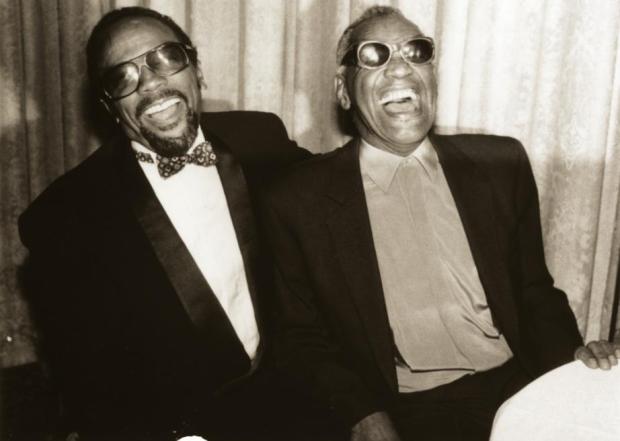
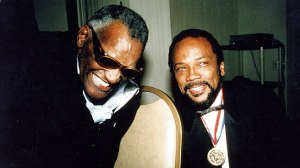 Later Charles described Jones saying “He was just an energetic young kid and he really loved music. He wanted to learn how to write, and of course, I knew how to write, and that drew us together–because I could help him out and show him some things about how to compose.” Jones would call Charles early in the morning to get help with writing and even after working all night Charles would get up to help him. Charles stated that he “could tell that [Jones] wanted to learn…and because I was able to show him some things, that made me happy.”
This Just In From Seattle Music History!!!
HISTORY LESSON: THE SEATTLE MUSIC SCENE – RAY CHARLES AND QUINCY JONES
When I think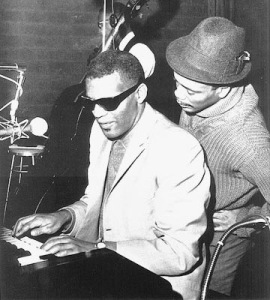 about Seattle, Washington, I think about three things. First, Seattle Grace Hospital, the setting for Grey’s Anatomy, second the Seattle Seahawks home of Marshawn Lynch and third never ending rain. I had no idea that even before Grey’s and Marshawn Seattle, in the 1940s, was home to a vibrant culture of Jazz and a new genre now known as R&B (then called “race records”). It was a Northwest Renaissance of sorts much like the one in Harlem in the 1920s.
about Seattle, Washington, I think about three things. First, Seattle Grace Hospital, the setting for Grey’s Anatomy, second the Seattle Seahawks home of Marshawn Lynch and third never ending rain. I had no idea that even before Grey’s and Marshawn Seattle, in the 1940s, was home to a vibrant culture of Jazz and a new genre now known as R&B (then called “race records”). It was a Northwest Renaissance of sorts much like the one in Harlem in the 1920s.
One day in 1948, in the midst of the bubbling Seattle music scene two young men crossed paths – Ray Charles and Quincy Jones. Ray Charles, a blind pianist from Florida, moved to Seattle because he wanted to move as far away from where he was as possible. Quincy Jones was from the Southside of Chicago. He went west as a child when his father had to flee Chicago after getting involved with a black organized crime family. 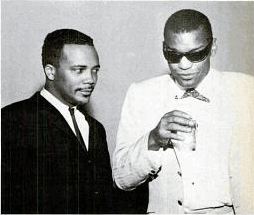

Upon his arrival in Seattle, Charles found work playing in white clubs in the day time and black clubs at night. His talent was undeniable and word about his performances soon spread around town. One evening Charles was playing at the Elks Club and 14-year-old Quincy Jones came in determined to see for himself the “blind dude” who was “tearing the place up with his singing and playing.” Jones certainly found what he was looking for and the two quickly formed a friendship.
Jones was immediately struck by how independent Charles was despite his blindness. Charles lost his sight at the age of seven, but his mother still made him learn things on his own and she let him explore the world freely. From that he learned to navigate the world with little to no help. When he met Jones years latter he had his own apartment, he could cook for himself and cross the street without being hit. Jones was also in awe of Charles’ talent for writing and composing music, and he wanted to learn everything he could from him.
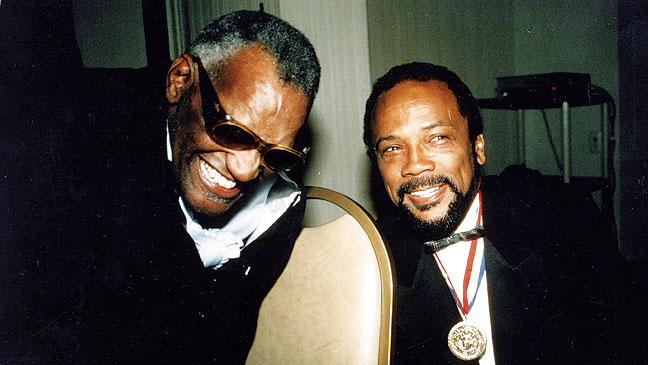 Later Charles described Jones saying “He was just an energetic young kid and he really loved music. He wanted to learn how to write, and of course, I knew how to write, and that drew us together–because I could help him out and show him some things about how to compose.” Jones would call Charles early in the morning to get help with writing and even after working all night Charles would get up to help him. Charles stated that he “could tell that [Jones] wanted to learn…and because I was able to show him some things, that made me happy.”
Unfortunately, these two musicians would have little time together in Seattle. Ray Charles left the city in 1950 to go on tour with the blues singer Lowell Fulson and his band. In 1951, Quincy Jones left for college in Boston, but shortly after, he left school and went on tour with Lionel Hampton‘s band. Even though their time in Seattle was  short, both Charles and Jones credit the city with giving them their big breaks. Charles stated that “Seattle is the town where I made my first record. And if you ever want to say where I got my start, you have to say that.” That record was “Rockin’ Chair Blues” named after another Seattle night club, the Rocking Chair, which was a hit “race record” in 1949. For Jones, it was in Seattle where he had his first opportunity, while still in high school, to go on tour with Lionel Hampton, but he was kicked off the tour bus by Hampton’s wife because he was so young.
short, both Charles and Jones credit the city with giving them their big breaks. Charles stated that “Seattle is the town where I made my first record. And if you ever want to say where I got my start, you have to say that.” That record was “Rockin’ Chair Blues” named after another Seattle night club, the Rocking Chair, which was a hit “race record” in 1949. For Jones, it was in Seattle where he had his first opportunity, while still in high school, to go on tour with Lionel Hampton, but he was kicked off the tour bus by Hampton’s wife because he was so young.
Both Ray Charles and Quincy Jones came a long way from smoky night clubs in Seattle, Washington. Charles became an international superstar and a musical pioneer who helped create the genre of R&B. Some of his greatest hits include “Hit the Road Jack” and “Georgia on my Mind.” Quincy Jones became the super producer behind “Thriller,” Michael Jackson’s record breaking sophomore album which put Pop music on the map. These two men changed the course of music, so it leads one to wonder what would music be if they had never met that night in Seattle.
References
Cassandra Tate. (2004). Charles, Ray (1930-2004). Retrieved from http://www.historylink.org/index.cfm?DisplayPage=output.cfm&file_id=5707
Peter Blecha. (2013). Jones, Quincy (b. 1933). Retrieved from http://www.historylink.org/index.cfm?DisplayPage=output.cfm&file_id=10354
President and Fellows of Harvard College. (2007). “Who Mentored Ray Charles?” Retrieved from http://www.hsph.harvard.edu/chc/wmy/Celebrities/ray_charles.html
Terry Gross. (2013). “Quincy Jones: The Man Behind the Music.” Retrieved from http://www.npr.org/2013/05/27/186052477/quincy-jones-the-man-behind-the-music
2015-11-20
This Just In From Seattle Music History!!!
- SEATTLE MUSIC HISTORY re-imagined in 8-bit!! Wana Check out your favorite ’90s music videos from Nirvana, Pearl Jam, and Soundgarden? Well look no further, grunge fan, because the ever-nostalgic Internet is here to rock your socks off NES-style. Fortunately for the flannel-wearing, Discman-listening, shaggy-haired set, YouTube channel Filthy Frackers has emerged with a gleeful grunge medley that’s as nostalgic in its form as it is in its content. Therein, classics like Nirvana’s “In Bloom” and Pearl Jam’s “Jeremy” are re-imagined as if they were part of a pastel-tinted NES soundtrack — all 8-bit synth sounds and lo-fi drum hits. The resulting medley is pretty hilarious, especially when Scott Weiland’s vocals on Stone Temple Pilot’s “Sex Type Thing,” are replaced with the grating squeal of a high-pitched synthesizer line.
 |


2015-11-07
Ever Heard Of Ira Hendrix? To Celebrate Mr. Jimi Hendrix's Birthday This Month I Believe That Mr. Jimi May Wish For His Unknown Siblings To Get The Spotlight! Here Is What I Know About Jimi's Elder Hendrix Siblings & His REAL Little Sister!
This Just In From Seattle Music History!!! HERE IS EXCERPT OUT OF HISTORYLINK.org Website Which Is Known As A Free Online Encyclopedia Of Washington State History! A Family of Entertainers! The Hendrix family first arrived in the Pacific Northwest during the Alaska-Yukon-Pacific Exposition of 1909. Nora (nee Moore) Rose Hendrix (1883-1984) was a dancer with Lacy’s Band and their traveling vaudeville troupe whose “The Great Dixieland Spectacle” show was featured at the expo’s Dixieland pavilion. Her husband, Bertran Philander Ross Hendrix (1866-1934), was a stagehand/roadie for the organization. Family legend tells that after the exposition concluded in October 1909, the troupe was stranded without future bookings and disbanded.By 1912 the couple had settled into Vancouver, B.C., and the following year brought them their first child, Leon Marshall Hendrix. Subsequent years brought additional offspring including James Allen Hendrix (1919-2002), who developed a love of competitive dancing by the 1930s. It was while attending a Fats Waller dance one night that Al, as he was called, met the pretty 16-year-old from the mining town of Roslyn, Washington -- Lucille Jeter (1925-1958) -- who would become his wife in 1942. Months later, on November 27, 1942, she bore their first child, Johnny Allen Hendrix, at Seattle’s King County Hospital -- today’s Harborview Medical Center (325 9th Avenue).
2015-10-31
TRACK BREAKDOWN: 'Dorellia du Fontaine" Performed By The Last Poets, Jimi Hendrix, & Buddy Miles. The L.P.'s Are Early Pioneers of Thee Art of Rap & Hip Hop Music
Show less
Add a comment...
So, You Say You Are A Songwriter Huh? How Do You Get Paid? How Do You Regulate Your Publishing Demands? How's The Elevation Of Your Demandability Plan Working?
This Just In From Seattle Music History!!! So, You Say Are A Songwriter? How Do You Get Paid? How Do You Regulate Your Publishing Demands? How do songwriters make money? It depends on who they are.


If the songwriters are pop writers like Max Martin or Ryan Tedder, they carefully craft a hit single, find a boy band or celebrity diva to sing it, and rake in the millions. The music publishing company takes a cut, and the performer responsible for the recording, and the record label. But if the hit is a hit, album sales, and streaming, and radio plays, and use of the song in movies and television and ads are usually significant enough that the songwriter makes bank.
If the songwriters are indie musicians like Rennie and Brett Sparks of the Handsome Family are, things work a little bit differently: they write their own music, tour and record albums themselves to promote it. On top of that, they take what they can get in royalties on their compositions.
Because many people find The Handsome Family’s songs strange and captivating, those royalties have become pretty significant in recent years. In 2014 one of their old songs got picked up as the theme for the HBO show, “True Detective”. In 2014, the famed “singer-songwriter-whistler-violinist-etc.” Andrew Bird released an album entirely of covers of their songs. Those covers do more than just raise the band’s profile -- Rennie and Brett make money off of them.
“Everything is percentages of percentages,” Rennie writes in an email. “[But] we get paid when our song is covered by other artists and we get paid when their cover is licensed.”
It all has to do with the business end of songwriting -- the way songs get sold and divied up, and the way copyrights and royalties get managed.
Early Music Publishing
16th century music printing, by Ottaviano Petrucci

Before a concept of copyright or intellectual property emerged, music publishing was literally just the printing and distribution of sheet music. In late medieval Europe, a printer could pay the monarch in exchange for monopoly rights over the printing and the sale of a work. This protection was called a “crown privilege”, and could be applied to both text and music.
As Martin Kretschmer and Friedemann Kawohl write in Music and Copyright,in 1498, the printer Ottaviano Petrucci petitioned the Doge (duke) of Venice for the exclusive rights to print any music for 20 years. Because there are no known examples of printed music from other Venetian printers until 1520, historians think his petition was successful.
These protections were printing rights, given to printers, not artists. Up until the end of the 18th century, the author of a printed work -- its writer or composer -- typically handed it over to a publisher in exchange for a single, one-time payment. In the early 19th century, things began to change, in a wave of laws, passed in revolutionary France, Prussia, and the UK. Under these new laws, the creator of the work became the central copyright holder. Statutes of protection were pinned to the author or composer’s life span, and a work needed to be original to the author in order to be protected.
Protections also started to extend beyond printed material. As German jurist Eduard Ganswrote in 1836, “In performances the author exposes himself to the risk of disapproval and thus the dramatic author should be able to decide every time anew to which public he presents his work.” Most of the great classical composers and dramatists of the time made their money, and their names, off of performances. These new laws granted artistsperforming rights: authority over when and how their works were performed.
"Behold the Pirate Publisher stand,/Stealing our brains for Yankee-land”; From Puck, 1886, restored by Adam Cuerden

The United States was a little behind in these reforms: printed music wasn’t protected in the United States until the Copyright Act of 1831, and even then, performing rights weren’t covered. More importantly, copyright laws in any country only applied to works created within the country’s borders, and not to any foreign works. Thus, British works could be copied and sold by anyone in the US, Germany, France or Holland, legally, and works from those countries could be reproduced in the UK. As the global economy grew, overseas piracy of printed documents did also.
In 1878 Victor Hugo, author of Les Miserables, founded the Association Littéraire et Artistique Internationale with the object of creating an international convention “for the protection of writers’ and artists’ rights.” Eight years later, this resulted in the Berne Convention -- an international agreement on copyright.
The original signatories of the Berne Convention were Belgium, France, Germany, Haiti, Italy, Liberia, Spain, Switzerland, Tunisia, and the United Kingdom. One of the biggest features about the Berne Convention is that it assigned copyright to creators by default, as soon as a work was “fixed” -- written or recorded -- without needing to be submitted or declared. The United States, wanting to still require people to register for copyright, entered other international agreements without this clause before finally coming around and joining the Berne Convention in 1989. There are 168 states participating in the Berne Convention, today.
Other Rights and the Hit Factory
A theater organ for silent film accompaniment
A copyrighted song consists of the music, “as written”, and any accompanying lyrics. If the composer and the lyricist are two different people, together they are considered the author of the work. Both the lyrics and the music are protected.
Once a copyright is granted, its holder has the option of licensing the work out to others for distribution, often in exchange for compensation. One common option is to work out aroyalty agreement, by which the copyright holder gets a cut of the profits from each derivative work -- in this case each performance or article of sheet music. Printing rights and performing rights were the first of several different ways to license out music, as music was soon to find even more forms.
At around the same time Victor Hugo was campaigning for the Berne Convention, Thomas Edison invented the phonograph. Suddenly, sound could be reproduced and distributed in recorded form. This (and, oddly enough, the player piano) gave rise to mechanical rights, first codified in the U.S. Copyright Act of 1909. Mechanical rights license the distribution, reproduction, and modification of sound recordings and other ‘mechanical’ copies of music.
A few decades later, “talking pictures” made their ascent. Movies used to be “silent”, dialogue would appear between scenes on title cards, and musical accompaniment was usually provided by a live, in-cinema piano player. But “talkies” were synched with recorded dialogueand synchronized scores. Thus came synchronization rights -- authority over when a song appears synched other media (as in movie scores, television, and commercials.) Sampling rights entitle copyright holders to compensation when their work is included in a collage, as in a DJ mashup.
...Baby One More Time, performed by 16-year-old Britney Spears, written by Max Martin
The present system rapidly took shape. Music publishing companies provide capital to promising songwriters in exchange for a cut of their future royalties on particular songs. Eager to see their investment return, the publishers then promote these songs to popular artists who might want to cover them, either in a recording or on stage, and track down owed royalties on the songs and manage their licenses -- whether mechanical, synchronized, sampling, print or performing. When somebody covering, or synching, or sampling a song, does not pay for a license, they can be sued. Record labels basically do the same thing, but for a sound recording. They pay publishers for the license to make the sound recording, and then issue their own license for whenever someone wants to use that particular recording. Synchronization and sampling royalties get paid to both the label and the publisher. Some companies do both -- purchasing the copyrights of both a song’s composition and sound recordings of it.
If you want to post a YouTube video of yourself playing a cover song, you’ll need a mechanical license -- to make an audio recording copy of the song, and a synchronization license -- because your recording will be synched with video. That means figuring out who holds the copyrights and obtaining those licenses. There are agencies that specialize in this.
This system has resulted in other pretty particular specializations, which is the secret to the present day pop industry. You end up with songwriters who might have production or performance careers of their own, but are also the ultimate creative source of most pop music: Ryan Tedder (who co-wrote Beyonce’s “Halo”, Leona Lewis’ “Bleeding Love”), Max Martin (The Backstreet Boys’ “I Want it That Way”, Britney Spears’ “...Baby One More Time”). On the other side of the coin are the celebrity performers who are essentially sparkly media vehicles for songs written, arranged, and produced by other people.
You also end up putting artists like Paul McCartney in some pretty awkward situations. The publishing rights to the Beatles’ Northern Songs catalog -- which contained practically every Beatles song -- became valuable enough in the 1960s that the Beatles and their publisher decided to trade it as a public company to save on capital gains tax. The publisher then sold his shares to a company, ATV, which wrested control of the catalog away from the Beatles. The ATV catalog, including the Beatles songs, was bought at auction by Michael Jackson in the 1980s (for £24,400,000). Then in the 1990s, Jackson merged his catalog with Sony/ATV. Paul McCartney, a former Beatle, now has to pay royalties to Sony/ATV every time he plays a Beatles song, even though he wrote and popularized it himself.
This juggernaut of a system has made many people rich. But not every musician wants to fit into that system. Some musicians want to make pop hits. Others, it seems, just want to make music. For those in the latter category, things work a little differently.
Such Handsome Folk
Brett and Rennie Sparks of the Handsome Family; photo Jason Creps, 2012
“We really have no plan and never have had one,” Rennie Sparks of the Handsome Family says. “We just sit around and write songs because it gives us great pleasure to finish a good one. Then we release records and we tour and play live in order to support that habit of loving to write songs.”
Rennie and her husband Brett are indie musicians. They’ve been writing songs and playing together since 1993. Rennie usually writes the lyrics, Brett the music. Their band, The Handsome Family, has been signed to small record labels. And even though Andrew Bird has said in concerts that the two of them are some of the greatest living American songwriters, they’ve never been approached by a music publisher, so they manage all of their own licensing and royalties. This means more work for them, but it also means they don’t have to share their royalties with a publishing company.
This freedom also means they can write some very weird music. As a reviewer wrote of themin NME, “Each song is like an abridged Flannery O'Connor story read aloud by Johnny Cash, hovering somewhere between the metaphysical and the mundane.”
"They do what the best songs can do: Condense all this meaning into the fewest possible words," Andrew Bird has said in an interview. “[Their writing] is so subtle and strange, it gives the listener credit for having imagination.” From their song, “Drunk by Noon”:
There once was a poodle who thought he was a cowboyHe lived in a cage the size of his thumbThough his white horse was a box of toothpicksHe galloped around until hit by a carSometimes I flap my arms like a hummingbirdJust to remind myself I'll never flySometimes I burn my arms with cigarettesJust to pretend I won't scream when I die
“[Our songs are] not, ultimately, about anything,” Rennie says. “They are a thing unto themselves. A lot of my thoughts, dreams and experiences go into them, but the end result is not a direct sum of parts. Art is mystical not mechanical.”
This mystique has not made them pop sensations. Their songs don’t get a lot of radio play, outside of niche college stations. They perform smallish venues, and their shows don’t always sell out. But their idiosyncratic style has won the hearts of other artists, and those artists have evangelized them to new listeners. The Handsome Family gets paid whenever someone covers their music, and whenever a cover is licensed (for synchronization, download, streaming, or performance). Andrew Bird’s Handsome Family cover album, Things are Really Great Here, Sort Of (which Rennie describes as a “great honor, and a breathtaking thing to hear”), did well. Two of his five most popular tracks on Spotify are Handsome Family songs -- one has over one million plays, the other over 2.5. That’s more than four times more plays than almost any song in the Handsome Family’s catalog, as they performed them themselves.
Still from the Season 1 True Detective title sequence
One track of theirs has exceeded the popularity of Andrew Bird’s album on Spotify, however.“Far From Any Road” has over 12 million plays. Released in 2003, the song was relatively unnoticed until T. Bone Burnett, music director for True Detective, selected it as the show’s theme song last year. It came as a surprise to the Sparks, who had never met Burnett nor heard of the show. Rennie has said in interviews that this exposure seems to have translated into a bump in record and ticket sales, and also to more activity across their catalog.
Now they’ve got money trickling in from many different directions. Performing royalties, whenever Andrew Bird covers a song, or anybody covers Andrew Bird covering them (Andrew Bird does have a publishing contract, so these royalties are professionally managed). Royalties on the sales and synchronization of the recorded covers. Synchronization fees from the TV show and youtube. Sales of their own albums, streamed tracks, and shows.
While it’s not been an easy path, nor a particularly lucrative one, it seems that there’s still a place for the strange and personal songwriter in today’s music industry.
“I do think there are a lot of really goal-oriented musicians out there who want to have ‘hit’ songs and definitely write for that,” Rennie Sparks, of the Handsome Family says. “[It’s a] different kind of pursuit. We’d probably be a lot more successful if we thought that way, but in the end it wouldn’t give us much pleasure. So we just do what we do.”
Subscribe to:
Posts (Atom)