HISTORY LESSON: THE SEATTLE MUSIC SCENE – RAY CHARLES AND QUINCY JONES
When I think about Seattle, Washington, I think about three things. First, Seattle Grace Hospital, the setting for Grey’s Anatomy, second the Seattle Seahawks home of Marshawn Lynch and third never ending rain. I had no idea that even before Grey’s and Marshawn Seattle, in the 1940s, was home to a vibrant culture of Jazz and a new genre now known as R&B (then called “race records”). It was a Northwest Renaissance of sorts much like the one in Harlem in the 1920s.
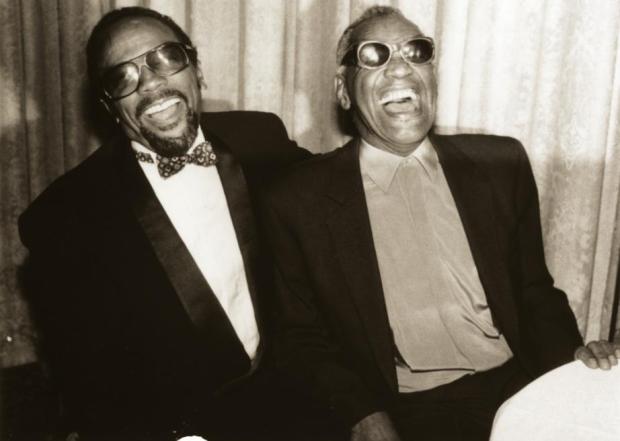
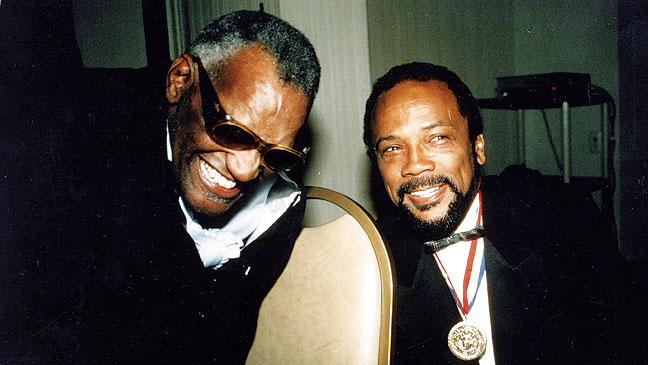
One day in 1948, in the midst of the bubbling Seattle music scene two young men crossed paths – Ray Charles and Quincy Jones. Ray Charles, a blind pianist from Florida, moved to Seattle because he wanted to move as far away from where he was as possible. Quincy Jones was from the Southside of Chicago. He went west as a child when his father had to flee Chicago after getting involved with a black organized crime family.
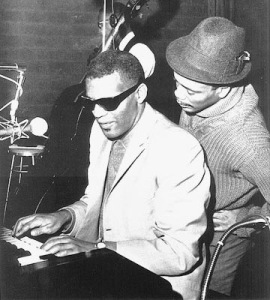
Upon his arrival in Seattle, Charles found work playing in white clubs in the day time and black clubs at night. His talent was undeniable and word about his performances soon spread around town. One evening Charles was playing at the Elks Club and 14-year-old Quincy Jones came in determined to see for himself the “blind dude” who was “tearing the place up with his singing and playing.” Jones certainly found what he was looking for and the two quickly formed a friendship.
Jones was immediately struck by how independent Charles was despite his blindness. Charles lost his sight at the age of seven, but his mother still made him learn things on his own and she let him explore the world freely. From that he learned to navigate the world with little to no help. When he met Jones years latter he had his own apartment, he could cook for himself and cross the street without being hit. Jones was also in awe of Charles’ talent for writing and composing music, and he wanted to learn everything he could from him.
Later Charles described Jones saying “He was just an energetic young kid and he really loved music. He wanted to learn how to write, and of course, I knew how to write, and that drew us together–because I could help him out and show him some things about how to compose.” Jones would call Charles early in the morning to get help with writing and even after working all night Charles would get up to help him. Charles stated that he “could tell that [Jones] wanted to learn…and because I was able to show him some things, that made me happy.”
Unfortunately, these two musicians would have little time together in Seattle. Ray Charles left the city in 1950 to go on tour with the blues singer Lowell Fulson and his band. In 1951, Quincy Jones left for college in Boston, but shortly after, he left school and went on tour with Lionel Hampton‘s band. Even though their time in Seattle was short, both Charles and Jones credit the city with giving them their big breaks. Charles stated that “Seattle is the town where I made my first record. And if you ever want to say where I got my start, you have to say that.” That record was “Rockin’ Chair Blues” named after another Seattle night club, the Rocking Chair, which was a hit “race record” in 1949. For Jones, it was in Seattle where he had his first opportunity, while still in high school, to go on tour with Lionel Hampton, but he was kicked off the tour bus by Hampton’s wife because he was so young.
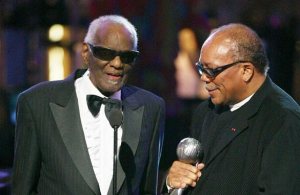
Both Ray Charles and Quincy Jones came a long way from smoky night clubs in Seattle, Washington. Charles became an international superstar and a musical pioneer who helped create the genre of R&B. Some of his greatest hits include “Hit the Road Jack” and “Georgia on my Mind.” Quincy Jones became the super producer behind “Thriller,” Michael Jackson’s record breaking sophomore album which put Pop music on the map. These two men changed the course of music, so it leads one to wonder what would music be if they had never met that night in Seattle.
References
Cassandra Tate. (2004). Charles, Ray (1930-2004). Retrieved from http://www.historylink.org/index.cfm?DisplayPage=output.cfm&file_id=5707
Peter Blecha. (2013). Jones, Quincy (b. 1933). Retrieved from http://www.historylink.org/index.cfm?DisplayPage=output.cfm&file_id=10354
President and Fellows of Harvard College. (2007). “Who Mentored Ray Charles?” Retrieved from http://www.hsph.harvard.edu/chc/wmy/Celebrities/ray_charles.html
Terry Gross. (2013). “Quincy Jones: The Man Behind the Music.” Retrieved from http://www.npr.org/2013/05/27/186052477/quincy-jones-the-man-behind-the-music
This Just In From Seattle Music History!!! Comedian Richard Lewis plays a psychiatrist in the new sitcom “Blunt Talk” on the Starz network. He spoke with Marc Myers.
In 1967, I was a sophomore at The Ohio State University in Columbus. After classes, I hung out at the Char-Bar and Charbert’s, the hip restaurant next door that attracted intellectuals and nut cases by day and local bikers at night. That’s where I met Kenny Weiss.
Kenny was a lead vocalist in many campus rock bands and later was in the James Gang. He tutored me in the best rock albums. In college in the ’60s, it seemed as if a classic album came out every day. Without iTunes, YouTube and all the stuff around today, you couldn’t keep up without the help of hip rocker friends.
One day in the late spring of ’67, Kenny said I had to hear an album by a guy named Jimi Hendrix. The guy’s name alone was cool. Then Kenny told me the album’s name—“Are You Experienced?” which was a great question, since I really wasn’t. I figured after I’d heard the album a few times, that problem would be solved.
Soon after Kenny told me about Hendrix, I borrowed the album from a friend. Another friend with a great stereo system said I could let myself into his place to listen to it. The first track was “Purple Haze” and opened with that sawing electric guitar riff and the electric bass underneath. Then the drums kicked in, and Jimi started singing: “Purple haze all in my brain / lately things don’t seem the same / actin’ funny but I don’t know why / ‘scuse me while I kiss the sky.”
The 1970 Atlanta Pop Festival held in Byron, Ga. marked the end of the large-scale festival era. This historic event produced three live albums, a Jimi Hendrix movie and one of the most sought after concert posters ever produced. The artwork used for this lithograph is from Version 3 which had the finalized band lineup. In addition to the bands listed on the poster, the festival featured Poco, Rare Earth, Bob Segar, Mott the Hoople and Grand Funk Railroad which had made their debut only one year earlier at the 1969 Atlanta Festival.
On the evening of April 4, 1968, the great Martin Luther King was shot down in Memphis, Tenn. The news shocked and angered the world as it tore people apart, and in other cases, brought them together via music.
According to Joni Mitchel's Website , a few nights later (April 7), at a small club in New York City called the Generation Club, a group of musicians including Mitchell, Jimi Hendrix, Janis Joplin, Buddy Guy, Al Kooper, B.B. King, and according to legend, Ted Nugent, bonded together in grief held an impromptu jam session in tribute to the fallen leader.(We reached out to Mr. Nugent, and he responded very kindly in a manner that indicates people must be confusing two different nights: “I did indeed jam with BB King, Al Kooper, Elvin Bishop, Buddy Miles, Rick Derringer, Steve Winwood, Jimi & others in NYC around that time. Joni Mitchell was never a part of any jams I was involved in.” Mostly, this answer made us wish camera phones were invented in the ’60s.)The evening began with a performances by Mitchell and Guy (a video of Guy’s take on “Stormy Monday” with Hendrix watching is embedded above). Eventually Hendrix made his presence known, and before long it was a full-on jam session tribute to Dr. King. Though a track titled “Ezy Rider” / “MLK Jam” appeared on the 2006 Dagger Records compilation, Burning Desire, it is not the fabled late night jam in question.The same night in Boston, Mayor Kevin White and city councilman Tom Atkins feared the onset of riots in wake of King’s assassination. They called on none other than James Brown to calm the city. Brown’s scheduled concert at the Boston Garden was, at last minute notice, aired live over public television station WGBH in an attempt to keep people home. The concert did the job, as police reported lower than average crime for a Friday night. On stage, Brown pleaded for people to be peaceful, and pleaded for the police to ease up. Both parties obliged.
Janie I am well aware of the trials and tribulations we all go through within our own families & please know that my request is for the benefit of only two people! The two people I am speaking on the behalf of are both past away and unable to say what I can only know and imagine is a topic of great interest to them both in the spirit world! Thee open air tomb that is Jimi's Memorial has the three sections of 9 stones that surround it; each stone representing each year of your brother's life within Jimi's Memorial. Jimi's Family; his father,your mother,aunts & uncles and spots for future siblings of James's to be laid to rest when their times come! Jimi's Real True To Blood Birth Giving Mother Ms. Lucille Mitchell Hendrix lays all by her lonesome buried alone on the same property within The Greenwood Memorial Home several thousands of feet away way across thee other side of the property! Janie know that a son is without his mother & a mother is without her son & do the right thing; not for me & not for you or anyone else for that matter other than Ms. Lucille & her little Mr. Jimi & invite her & have her moved into the circle of 27 Stones so she & her son who so many of us around the world feel a relation through his words and music and his love and mission for everyone to "Keep On Movin, Straight Ahead!" Thank You To All That Read This & Feel The Same Way! -ryan m. menges I have added a link to a video I put together just a little more than one year ago on April 2, 2014 please all that watch it, watch it all the way through & hear the words that are shared in the first song, even if the style of music is not the style you may think is fitting because it surely is fitting & then the let Jimi bring you all home on the second song in this 5:53 video i made not knowing I was going to make this petition one year later! I FIND IT ALL TO BE RELATIVE...
LETTER TO
Experience Hendrix
Janie Hendrix
I am requesting that The CEO of Experience Hendrix who is also The Stepsister Of Mr. James Marshall Hendrix & Thee Overseer Of Jimi's Memorial to stand up and do the right thing as Mr. Jimi would want!
This Just In From Seattle Music History!!! To write about singer and guitarist Trevor Burton’s life would fill at
least one big book, what with his rock ‘n’ roll history, the drugged-up
party days, and playing with names such as Jimi Hendrix and Steve
Winwood.
Since 1983 he has led the Trevor Burton band up and down the country,
and they will be coming to Hockley’s Touchline live music club next
month.
You might say Trevor was born to play, and it’s what he has stuck to
his entire life, despite at one point several years back, becoming
gravely ill with Legionnaires’ disease.
He took nearly a year to recover from it and be able to sing again, as
his lungs were so damaged, but as soon as he did, he got back down to
business.
“Well, it’s what I know – and I still feel like I’ve got loads more to
do,” he said in his relaxed Brummie tones, when I asked after 50 years
in the business, if he every felt like hanging up his guitar. “I very
rarely feel like stopping, very rarely. What else would I do now anyway?
Become a milkman?”
He was only little, six or seven years old, when he decided playing music was what he must do.
“I heard the early rock ‘n’ roll, white rock ‘n’ roll, people like
Buddy Holly and Eddie Cochran. I’d never heard music like it before,”
said Trevor. “It was electrifying!
“I was naturally musical anyway, starting off on the drums and then
progressing onto guitar because I saw people like Cliff and the Shadows
so had to do that.”
He was just 13 years old when he created his first band, the
Everglades, and turned professional at 15, joining Danny King and the
Mayfair Set, before becoming one of the founding members of the Move in
1966.
Trevor only stayed in the band for two-and-a-half years, getting five
top five singles in that time, including the massive hit Flowers in the
Rain and the band’s only number one Blackberry Way.
Then Trevor met Jimi Hendrix, whose musical influence set the teenager onto a new path.
“We did a lot of shows with Cream and Jimi Hendrix,”
said Trevor, who was at that time, 17. “What Jimi was playing was very
heavy, and I started discovering more about that music, about blues and
going down that road. We did a few shows with him and got to know him
very well.
“He was a very gentle guy, very courteous, and always stoned out of
his brains...well, we all were. Jimi was quite shy really. He hated his
own voice and always wanted it buried in the track, but the engineer
would always bring it up again.”
His new influences led him to leaving the Move and jamming with Jimi,
spending a lot of time at Steve Winwood’s country house with the band
Traffic, and playing the blues.
“I suppose the Move were a psychedelic pop band, then they went heavy,
but then started to do pop again and wearing warpaint,” said Trevor,
referring to the makeup the band members started to wear. “Well,
thankfully I left before the warpaint came along.
“But I just got into this other music and playing with the others, and
I felt after that I didn’t want to go back to doing Flowers in the
Rain.
I didn’t want to do pop music anymore.”
He put together a band called Balls with Steve Gibbons of the Ugly’s
and Denny Laine of the Moody Blues. It was managed by the former Moody
Blues/Move manager Tony Secunda.
Record producer Jimmy Miller was hired for the group’s recording
sessions and with Secunda arranging a large cash advance from the record
company, the group started to compose and record new material while
playing gigs. Balls split at the end of 1969.
Their only release was a single that did not come out until September
1971, an antiwar anthem called Fight For My Country, composed and sung
by Burton, and including backing vocals from Gibbons and Laine, who also
played bass guitar on the track.
“I just wanted to do my own thing really,” said Trevor, “so I became a session musician for Island Records.”
It was during this time Trevor enjoyed jamming and recording with
several highprofile musicians, notably his friend Paul Kossoff who had
been in Free.
“Of all the albums I have been on – probably about 15 or 16 albums
with different people – the one I did with Paul called Backstreet
Crawler is my favourite. I played bass on the whole of the B side, which
was all recorded, totally spontaneously, a jam for about 22 minutes, I
think it is.
We just recorded it and Paul said, ‘that’s it’ and that was to be the whole side.
“It was one of the last things I did with Paul before he died. It was special.”
The rock ‘n’ roll and drugsfuelled lifestyle eventually caught up with
Trevor, and it is said his old manager Secunda turned up on his
doorstep with a bag of money and told him to get himself back to his
home in Birmingham before he died.
Trevor took the advice.
His next notable step on his musical journey was to hook back up with
Steve Gibbons, who he ended up playing with as part of the Steve Gibbons
Band the for next eight years, touring the world. A particular
highlight during this time was when they supported the Who, sometimes to
stadiums full of 80,000 people, a time which Trevor describes as “scary
and fun”.
These days may be less wild, but Trevor, now aged 66 and still living in Birmingham, shows no signs of stopping.
“I’m planning to do another album this summer,” he said.
“Usually I only take about three days to record an album, because I
think if you can’t get it within three takes, then forget it. But this
time I want to go into the studio for a month to record it and be a lot
more experimental. I’ve got some ideas buzzing around in my mind, but I
want to try it all out once we are in the studio,” he said.
The Trevor Burton band (Trevor Burton – guitar, vocals; Bill
Jefferson – drums; Pez Connor – bass and Abby Brant – keyboard, vocals)
will be at the Touchline Music Club at Hockley Community Centre,
Westminster Drive, Hockley, on Friday, April 24, from 8pm until
11.30pm. Tickets are £10 plus £1 booking fee, and are available from
wegot tickets.com
This is the one we’ve all been waiting for; ‘Sonic Highways’ is about how place influences music, but it’s also about director and star Dave Grohl. “I wouldn’t be here without Seattle,” the head Foo Fighter says. “Seattle’s like my phantom limb.”
And speaking of Soundgarden, the cover photo of Chris Cornell on that first release, ‘Screaming Life,’ was taken by Seattle local Charles Peterson. Even if you don’t know that album you recognize Peterson’s work. His blurry, black and white photos of Seattle bands during the period are the image most of us have of that time and place. That’s by design: When Sub Pop saw Peterson’s work, they knew how iconic it would be.
Neither would a lot of great music made over the last 25 years. Not since the British Invasion had a regional scene exerted as much global influence as the Seattle scene of the late ’80s/early ’90s. As is true of a lot of regional scenes, it grew out of one tiny seed: isolation.
Seattle was so far off of the cultural map that touring bands rarely, if ever, made it to the Pacific Northwest. This led to a do it yourself movement quite similar to what ‘Sonic Highways’ covered in the Washington D.C. episode. If the bands won’t come to you, then you must become the band, and that’s what kids did. You know the names: Screaming Trees, Mudhoney, Soundgarden, Green River, Mother Love Bone, Nirvana. These were just local guys playing for each other.
Which isn’t to say that no music had ever broken out of Seattle. Jimi Hendrix was a Seattle boy, after all, as was Ray Charles. Heart, too. The real find of the episode, though, is a mid-’60s Seattle band named the Sonics that can only be described as proto-grunge. Check these guys out:
The DIY ethos didn’t just permeate the bands playing the clubs, either. We’re treated to a brief history of Sub Pop, the little fanzine that became one of (if not the) most important labels in independent music. These were the guys who first released Green River, after all — the band that spawned both Mudhoney and Pearl Jam. If that’s all they ever did then Sub Pop would have earned its place in history, but they also released the first albums by Soundgarden and Nirvana.
Peterson shares a great story about the one that got away. He attended Nirvana’s first Seattle gig, shot the opening act, and split without ever taking a single photograph of Nirvana because he didn’t like them and couldn’t imagine them going anywhere.
Nirvana. That’s really what this episode is all about, It can’t be about anything else. Nirvana is the vehicle that turned Grohl into a superstar. Foo Fighters guitarist Pat Smear was sort of a silent fourth member of the band, too. Even more importantly, this is where the two men lost their friend, Kurt Cobain. Bassist Duff McKagan, another Seattle boy, apologizes to an off-camera Grohl for not calling after Cobain’s death. “Thanks man,” we hear a very sincere Grohl reply.
Every ‘Sonic Highways’ episode results in a song recorded in a local studio, this time at the wildly eccentric Robert Lang Studio. Lang is a Seattle native who grew up just three blocks from the location of his studio, which he has literally been digging out of a hillside for the last 30 years. The joint started as a single garage, but Lang would trade bands studio time for shovel time, removing 400 truckloads of dirt from the side of the hill to build a labyrinth of underground stone and marble rooms.
Digging deep emotionally, recording underground. What else could the Foos name this week’s song but ‘Subterranean?’
According to legend, the south african poet little Willie Kgositile, arrived in New York n 1968, where he joined the Harlem based, black writer's workshop previously mentioned in "The origin of The Lasts Poets" segment, and after joining the workshop, which was called the "East Wind" and is located in Harlem, N.Y. the unofficial black capital of America. Little Willie, who had fled from the racist aparteid regime in south africa, had written a poem, and in the poem, he said: "That this was the last age of essays and poems, and that guns and rifles, would take there place, so therefore, we are the last poets of this age. " The poets who were in the workshop all concurred that they were the last poets, in the figurative sense of the words. Little Willie left shortly thereafter, and reportedly went to Zimbabwe, leaving the poets in their workshop, contemplating and working on how to articulate what it meant to be last. Not that was difficult at all, since as a people, historically, the black population in America had always been "last." But in whatever endeavour they were allowed to participate in, the two most well known professions being entertainment and sports, they excelled and became first and foremost in those or any other particular field that they were permitted to engage in. So from the time that the Africans were brought to the shores of America to the present, they have had to historically struggle for recognition. Competing against the dominant society, as well as each other, they had to "strive to stay alive".
The Last Poets, became word smiths and hammered the feelings of their people, and eventually all oppressed people in the world, into the shape and scope of the struggle between despair and hope. After many personnel changes, the longest performing and active members of the group, honed the art form into a vehicle of total expression, which is today called rap and hip-hop. But the price that they had to pay for introducing their art form (Spoagraphics) to the world, would cost them their lifetimes, and for some members their lives.
They were the first rap group to be acclaimed by the people and went on to sell a million records by word of mouth, although they were the last to be acknowledged by the recording industry, who sold their records on the down-low, without the benefit of advertising and promotion, and continue to do so, for thirty years on since the group was first formed.
In addition the Last Poets, were originally a collective, that granted itself the right to come and go as they pleased. The two members who opted to stay together for the longest period of time, managed to record six albums, publish one book, and briefly perform in one movie which starred Janet Jackson and Tupac Shakur, which was entitled: "Poetic Justice"
The Last Poets, though, never intended to get into show business, and considered their commercial popularity to be divine providence.
Thus, the two most active members, continued to evolve the art form, individually and collectively, for twenty-four years, until they became literally and figuratively the "Grandfather's of Rap." In the beginning,The Last Poets consisted of Gylain Kain, Abiodun Oyewole, David Nelson, Felipe Luciano, Omar Bin Hassen, Jalal Nuriddin & Sulieman El-Hadi. Due to conflicts in style and content, they performed in various combinations with each other, or not at all, until such time as a suitable cohesive lasting unit could knit together, in complementation as opposed to competition, and Jalal and Sulieman emerged as rhyme partners for almost a quarter of a century. Together they developed the science of making sense out of non-sense until Sulieman passed away on October 3, 1995.
Because rap and hip-hop is performed today in rhyme, that unit of the Last Poets, are considered to be the pioneers of today's rap, and the "hip in the hop."
Today, Jalal, the sole remaining member of that unit, has evolved the art form to the bard level, and after having recorded his first rap record with Jimi Hendrix in 1969, he continues to develop his own style of poetry, which he calls "Spoagraphics" as a separate development in his evolution, and doesn't mind being "Last but not least". In as much as his objective as an artist has always been to master his "axe" a piece of advice given to him by Max Roach, in the early days of his career.
He has recorded four solo albums, and one EP. His experiences as a member of the last poets, will be rhymed in future time, in his forthcoming book.
The Grandfather of Rap and Jimi Hendrix:
Under Jalal's Nom De Plume (Lightnin' Rod) he recorded his first solo rap record, with Jimi Hendrix in Jimi's studio, Electric Ladyland, located in mid-town Manhattan, in the heart of New York City, in the summer of '68.
Jimi first got hip to me through Alan Douglas, owner and President of his self-named independent record label, Douglas Records.
Four months earlier, my group, The Last Poets, had recorded our first album, the self-titled: The Last Poets, with Douglas acting in the capacity of "executive producer"; which meant that he provided the finance and the facilities, and we provided the artistry.
Douglas had been sounding out the album, by playing It for various people within the music industry, to gauge their reaction to it, and among them was Jimi Hendrix.
The first Last Poets album was rich in revolutionary thought content, with a tapestry of profound poetry, within enlightening mind metaphors, and backed by traditional African percussion, and it sounded like voices that had come from straight out of the drums.
Upon hearing this, Jimi became intrigued. Now suddenly, here was a record that set the record straight, and it hadn't even been released yet.
Douglas had been in close contact with Jimi, and had artistic and business interest, and by turning him on to the Last Poet, had managed to impress Jimi, as well as everybody else, and had set himself up in the alternative music market, with his independent label.
Jimi, like a lot of other black artists,within the blues and jazz genre, saw Douglas as the key to expand into other areas of music in collaboration with other black artists that were respected and admired by the public.
Douglas had acquired a reputation, for being affiliated with black artists which had been enhanced by his association with the Last Poets, and later on from his release of two Malcolm X albums , containing his speeches, which he had negotiated in a contract with the late Betty Shabazz, the widow of Malcolm X.
Over a period of decades, Douglas had accumulated a formidable catalog, on some of the premier jazz and blues musicians of their times, such as Billie Holiday, Duke Ellington, featuring Max Roach and Charlie Mingus in a trio, which was called "Money Jungle."
He also put out albums on Kenny Durham, Art Blakey, and Muddy Waters, plus Eric Dolphy, and later on after Jimi's death, he posthumously released two albums on Jimi.
Courtesy of our managers, "The East Wind Associates", he now had the Last Poets in his repertoire. The problem was though, was that he didn't know what to do about it, and so the album hadn't been released yet.
Nevertheless, he proceeded to assure me that the album would be released. Eight months later, in the following year during the spring of 1970 I called him up to ask about the album, and he told me that Jimi had heard the album, and it knocked him out, and that he wanted to meet me, and had proposed that we do a track together.
I had mixed feelings about it at first, because although I had heard of him, at that time I was not exactly a fan of his, in as much as I was busy developing my own art, and my personal interest was my involvement in black music, which was more into Bebop, Blues, Rhythm & Blues, Doo Wop and Afro-Cuban Jazz, with Gospel as my harmonic source point.
The Grandfather of Rap and Jimi Hendrix: part 2
But Jimi was rockin' it with a whole new old-roll/role, and he was like a new blues all by himself. So I was pleasantly surprised when I found out that he had become an instant fan, and yet at the same time, considering the economy of the Last Poet's music at the onset of our first album, I didn't think our music was turning him on, so I figured it must be the message.
Although I wasn't a fan of his music then, I knew that when I got a minute I'd have to check him out, and see what all the fuss was about, because I was a fan of his rebellious image at that time, that he was projecting, in breaking the then conventional modes of artistic expression, and he confirmed that he was a fan of my message, and dug the way I rapped. At that time, Jimi's music was more popular with the white youth, than the black youth in America as well as England, and Jimi wanted to expand his fan base within the black community.
A lot of this was due to the type of music he played, which struck me as rock based in the blues. But to the black community at that time, rock was associated with famous white rock groups, who had separated rock from roll, such as The Grateful Dead, Black Sabbath, Jim Morrison "The Doors, The Byrds, The Mamas and Papas, Frank Zappa, The Beach Boys and other artists of that genre.
The black community for their part, were into James Brown, The Jackson Five, The Funkadelics, The Spinners, Harold Melvin and The Bluenotes, The Vibrations, Marvin Gaye and Stevie Wonder and Sly "The Family Stone, Dick Gregory & Richard Pryor, The Temptations, The Four Tops, Aretha Franklin, and many, many more dynamic black artist of the day, including The Last Poets.
Plus heavy metal was becoming known as the hardness within the rock, like bebop became the hardness within jazz.
So Jimi was considered a black artist playing rock music, the way that rock musicians wished they could play. But the black community had witnessed rhythm and blues, give birth to rock n' roll, only to see rock jettison roll, and become just rock, which was played primarily by white musicians, and they weren't sure if Jimi was playing white music in a black way, or black music in a white way, or both, and at that time at the end of the sixties, and the beginning of the seventies, they weren't sure about his music.
Thus they were happy for his success, but ambivalent about his art at the time, and attributed his success to his popularity amongst the white youth, in particular the hippie generation of that era, who brought most of his albums.
I wondered if Jimi wanted me to help bridge that gap with my rap, so that the black community could dig the roots of his music. I knew that he was a revolutionary artist, who had revolutionized the way the electric guitar was played, and how, and would influence generations to come, long after he was gone.
But outside of his art and reputation, I had no idea where Jimi was coming from until I met him in person. At that time, the black revolution in America was in progress, and the black community in general, wanted to know where Jimi stood on the issue of the revolution.
But Jimi felt misunderstood, or not understood at all, and focused his attention on making his position known, in regards to the Vietnam war, which was raging at the time, and he did it primarily through his music, rather than his lyrics.
Since both black and white youths were against the war, it was a central theme, that everybody could identify with.
The Grandfather of Rap and Jimi Hendrix: part 3
Muhammad Ali, had already set a precedent for the black community, by refusing to be inducted into the army, and he was a hero in the black community, as well as being admired by many whites for his stand against the war.
Jimi accomplished this with his rendition of the "Star Spangled Banner". I now knew that Jimi liked the Last Poet's recitations, and my poetry in particular, which meant that he was more hip to my work, than I was to his, at the time.
I figured that he identified, with the reality of our situation on a ground level, and I at least knew for certain that he was a rebel, and against injustice of any kind. Douglas arranged for me to meet Jimi, along with Buddy Miles, at his penthouse suite, on West 54th Street, in mid-town Manhattan, at the end of July of 1969, and I showed up expecting Jimi to be an out-going personality, only to find him shy and introverted, humble and quiet, except when he was playing.
Jimi smiled like he was glad to meet me, more so than I was him, he looked earnest and sincere, and gave me maximum respect. I returned the compliment, but he didn't want any, and said he was too interested in what I was doing with words, and he wanted to put some music to words with me.
I became impressed with his straight forwardness Douglas then introduced me to Buddy Miles, who also gave me a big smile, and then slapped me five, saying: "Yeah man, that stuff y'all ran down is right on! And Jimi and I, dig the shit out of it, so Jimi wants to work with you, you heard him for yourself, and Jimi can play anything on his axe, that brother is bad!" I looked over at Jimi, who was grinning and nodding his head up and down in agreement, just then Douglas, who had been standing by and listening, put both of his arms around Buddy's shoulders, who was sitting down at the time, and said: "Buddy's my funk machine."Buddy smiled and said: "How funky do you want it!" And began moving his hands, which had been clutching his drum sticks, and started tapping out an imaginary beat in the air.
Douglas laughed, but I didn't like the sound of it. I realized that Jimi and Buddy were part of the living music, that was their way of life, and it encompassed their lives. They lived and breathed it, and it was a testimony of their soulfulness, which ran the gauntlet of emotions.
Up to that point, I had been silent, just takin' it all in. Finally I said: "Sounds like y'all got it all figured out.They all laughed, and Douglas said: "I can get the studio time, any time you guys are ready, we can use the "Electric Lady land "(Jimi's Studio) Jimi chimed in saying: "And I don't want no money for this, I just want to have fun and jam, so if their is any money to be made off the track, you and Douglas can work it out."Douglas said: "We'll split it man, Jimi will keep the music, and you keep the publishing on the lyrics, I just want to see
it happen.
The Grandfather of Rap and Jimi Hendrix: part 4
"(excerpted from the Grandfather's forthcoming book: Lightnin' Rod and Jimi Hendrix : The title of the track was " Doriella Du Fontaine" 1968 was the year in which Jimi Hendrix attempted to push his music into as many simultaneous directions as possible, much to the chagrin of his managment, who wanted him to stick with the winning Experience formula. An irrepressible improviser, Hendrix not only jammed with his blues-rock peers (Johnny Winter, Clapton, Bloomfield, Winwood, etc.) but also made inroads into jazz, swapping notes with John Mclaughlin and Larry Coryell, and discussing recording projects with Miles Davis, Roland Kirk and Gil Evans.
That year too, he made an album with Arthur Lee's band "Love" and hooked up with another black music original, Jalal of the Last Poets to record with a track called "Doriella Du Fontaine".
The band assembled for this one-off collected together music under the name of Lightnin' Rod, was the prototype for Hendrix's Band of Gypsies, launched the following year.
Bassist Billy Cox was a pal from Hendrix's army days, and drummer Buddy Miles, had played with the guitarist when both were side men for Wilson Pickett.
On organ at this session was Larry Young, subsequently a member of Tony Williams trailblazing band "Lifetime" a unit in which John McLaughlin would incorporate adaptations of Hendrix's innovations.
And indeed, it would not be far-fetched to claim that a cross-cultural synthesis is already at play on this 1968 recording.
For all of it's obvious "jam session" informality and rough edges, "Doriella Du Fontaine" sounds extraordinarily fresh.
This Just In From Seattle Music History!!! IN SEPTEMBER 1964, AGED 21, Jimi Hendrix (left pictured as an infant) joined Little Richard’s touring band The Upsetters, and further developed the unique guitar style that would shortly electrify the world.
But this was not the first time that Hendrix had met the Georgia-born rock’n’roll star. According to Jimi’s younger brother, Leon, the budding guitarist initially encountered Richard in their home town of Seattle at the age of 12.
Jimi Hendrix with his brother Leon (left). A tumultuous childhood haunted them both.
“Me and Jimi met Little Richard in 1959 because his mom and sister lived in Seattle,” recalls the surviving Hendrix brother, speaking to MOJO. “I took a bunch of greens over to a neighbour’s house, Mrs Penniman, saw this black limo and Little Richard. I ran home to get Jimi, we rode bikes up there and sat there in awe at him preaching at the Goodwill Baptist Church.”
Speaking in the same interview, published in the latest MOJO magazine, Leon recalls the tumultuous home life that haunted the brothers as they grew up and explains how Jimi – whom he called Buster – used music to escape what was an increasingly fractured domestic situation. “When he got that ukulele with one string on it, everything took off. He got free,” says Leon.
For Jimi Hendrix, his graduation from ukulele to the six-string was to be the making of him. He left Seattle in 1961, initially enlisting in the US Army before becoming a sought-after guitarist. “He was the best guitar player so everyone wanted to hire him,” reflects Leon.
By the time he’d joined Little Richard’s band, Hendrix had already played with Wilson Pickett, The Isley Brothers, Chuck Jackson and Sam Cooke. While he knew his role as a sideman, his flamboyance was evident and appears to have caused clashes with Richard.
Nevertheless, he stayed long enough to record one single with Richard – the smouldering, begging-and-pleading I Don’t Know What You’ve Got (But It’s Got Me)in early 1965, released on Vee-Jay – and he also made his first TV appearance while a member of Richard’s band, backing soul duo Buddy And Stacy as they covered Junior Walker And The All Stars’ Shotgun on Night Train, filmed in Nashville in the summer of ’65.
The clip shows Hendrix resplendent in his dinner suit and bow tie, digging to the horn-powered groove. Less than 18 months later, Jimi landed in London and his meteoric rise had begun…


 about Seattle, Washington, I think about three things. First, Seattle Grace Hospital, the setting for Grey’s Anatomy, second the Seattle Seahawks home of Marshawn Lynch and third never ending rain. I had no idea that even before Grey’s and Marshawn Seattle, in the 1940s, was home to a vibrant culture of Jazz and a new genre now known as R&B (then called “race records”). It was a Northwest Renaissance of sorts much like the one in Harlem in the 1920s.
 short, both Charles and Jones credit the city with giving them their big breaks. Charles stated that “Seattle is the town where I made my first record. And if you ever want to say where I got my start, you have to say that.” That record was “Rockin’ Chair Blues” named after another Seattle night club, the Rocking Chair, which was a hit “race record” in 1949. For Jones, it was in Seattle where he had his first opportunity, while still in high school, to go on tour with Lionel Hampton, but he was kicked off the tour bus by Hampton’s wife because he was so young.


 Janie I am well aware of the trials and tribulations we all go through within our own families & please know that my request is for the benefit of only two people! The two people I am speaking on the behalf of are both past away and unable to say what I can only know and imagine is a topic of great interest to them both in the spirit world! Thee open air tomb that is Jimi's Memorial has the three sections of 9 stones that surround it; each stone representing each year of your brother's life within Jimi's Memorial. Jimi's Family; his father,your mother,aunts & uncles and spots for future siblings of James's to be laid to rest when their times come! Jimi's Real True To Blood Birth Giving Mother Ms. Lucille Mitchell Hendrix lays all by her lonesome buried alone on the same property within The Greenwood Memorial Home several thousands of feet away way across thee other side of the property! Janie know that a son is without his mother & a mother is without her son & do the right thing; not for me & not for you or anyone else for that matter other than Ms. Lucille & her little Mr. Jimi & invite her & have her moved into the circle of 27 Stones so she & her son who so many of us around the world feel a relation through his words and music and his love and mission for everyone to "Keep On Movin, Straight Ahead!" Thank You To All That Read This & Feel The Same Way! -ryan m. menges I have added a link to a video I put together just a little more than one year ago on April 2, 2014 please all that watch it, watch it all the way through & hear the words that are shared in the first song, even if the style of music is not the style you may think is fitting because it surely is fitting & then the let Jimi bring you all home on the second song in this 5:53 video i made not knowing I was going to make this petition one year later! I FIND IT ALL TO BE RELATIVE...
 And speaking of Soundgarden, the cover photo of Chris Cornell on that first release, ‘Screaming Life,’ was taken by Seattle local Charles Peterson. Even if you don’t know that album you recognize Peterson’s work. His blurry, black and white photos of Seattle bands during the period are the image most of us have of that time and place. That’s by design: When Sub Pop saw Peterson’s work, they knew how iconic it would be.
Neither would a lot of great music made over the last 25 years. Not since the British Invasion had a regional scene exerted as much global influence as the Seattle scene of the late ’80s/early ’90s. As is true of a lot of regional scenes, it grew out of one tiny seed: isolation.
And speaking of Soundgarden, the cover photo of Chris Cornell on that first release, ‘Screaming Life,’ was taken by Seattle local Charles Peterson. Even if you don’t know that album you recognize Peterson’s work. His blurry, black and white photos of Seattle bands during the period are the image most of us have of that time and place. That’s by design: When Sub Pop saw Peterson’s work, they knew how iconic it would be.
Neither would a lot of great music made over the last 25 years. Not since the British Invasion had a regional scene exerted as much global influence as the Seattle scene of the late ’80s/early ’90s. As is true of a lot of regional scenes, it grew out of one tiny seed: isolation.


 But
But 

